








Steve Simon: New rules reflect improved alignment and cooperation
The WTA Tour is set to introduce new rules for the 2019 season that look to expand the ranking and seeding protections afforded to players returning to the tour after extended absences due to family, illness, or injury reasons, as well as modernize the tour's attire rules and standardize pace-of-play and withdrawal rules to provide more consistency across the sport.
WTA CEO Steve Simon sat down with WTA Insider to discuss the process and rationale behind the changes to the WTA Rulebook.
Read Part I of Simon's interview here. Part II follows below:
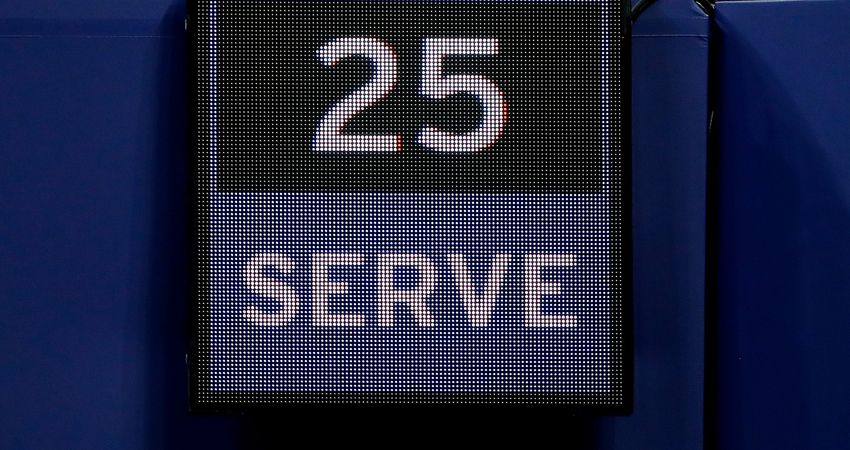
WTA Insider: Turning to the 25-second shot clock. Prior to this, the rule was 20 seconds between points and obviously we didn't have a shot clock then. The shot clock was trialed last summer during the summer during the US Open Series as well as the 1:5:1 rule. Can you talk through the rationale of rolling out both on the WTA Tour next year?
Simon: I think it was a natural progression. You’re right, we trialed it over the summer because the US Open had made the decision to introduce it into the main draw. I think it's a reflection of us being more aligned and working together. We worked directly with the ATP, the Grand Slam officiating group as well as the US Open to make sure we had the system tested and we had our players well educated on it before they got to the Grand Slam. I strongly believe it doesn't make sense to have the players entering a Slam, which are obviously the biggest events of the year, and have a different set of conditions to compete under that they haven't seen before.
So I think it went very positively and it definitely went through the US Open this last year with all the top players with no incidents, which I think is very positive and, again, a reflection of the testing. And now that it's implemented and we know that it's going to be used in Australia and other events, there's no reason why it shouldn't become part of the tour.
So with that, there's a process to go through of course, because it is technology and there are costs. Our members were supportive that in 2019 all of the Premier events will be required to have the clock and at the International events it will be optional. And in 2020, all events will be required to do it.
Our approach is aligned with the ATP, which is good as we have a number of combined events. As we saw this as something very positive that was introduced and as I hate to start and stop things, we wanted to be aggressive and progressive and make sure that we had this in place and got this rule set up for the next two years to get this implemented and carry through what was introduced at the US Open.
WTA Insider: So is the shot clock more to bring everything into alignment and for there to be sport-wide consistency, or is it to try to speed up matches? It sounds like from your answer that it's less about pace of play on the WTA Tour and more just about this is just to keep things consistent across the sport.
Simon: Well, I think that it's both of those. First of all, it came in to obviously make sure that the tennis was progressing and making sure it was doing it in a timely basis. Now that it has been established and the clock has been accepted, it now is about consistency throughout the year and on a regular basis.
WTA Insider: We talk a lot within tennis about the trend amongst the federations, tournaments, and broadcast, that we need to figure out a way to shorten things up and tighten up matches. Do you feel like these measures - shot clocks, reduced toilet breaks - have a meaningful impact?
Simon: I think all of these things are contributing towards, for lack of a better word, "tightening" as you said. I think it continues to professionalize everything as well. It's important to keep things tight and I think the 1:5:1 (players will have 1 minute to come to the net for the coin toss, a 5-minute warm-up, and 1 minute to start the match) keeps us on time. On the 25-second clock, the players aren't taking less time, they're not taking more time, but it keeps it flowing.
I think there's no need for more than one toilet break in a match. I think that's sufficient. We want to help broadcast, two toilet breaks is a long time for broadcast to fill. I think these are all things that continue to help us tighten and professionalize what we're doing.
WTA Insider: Let's talk about the new withdrawal rule. Now, if you're in the main draw and you withdraw before the first round, you are still entitled to your first round prize money. Can you talk through that one a little bit?
Simon: I think that is again about how the sport is beginning to find alignment, which I think is positive. The basis for the introduction had to do with integrity, not wanting players to be going on court just to play and get their money, but actually going out because they're in good health and ready to compete. It was first introduced by the ATP, then adopted these past two years by the Grand Slams and now we've aligned with it as well and aligned with the ATP approach to it because we obviously have combined events as well and we need to treat the members the same.
WTA Insider: Is there ever a risk though with a rule like this, that you have players who might normally pull out in advance of the draw, who everybody knows are just not in a condition to play, but now they will still show up. They'll put their name on the draw in order to pull out and take the prize money. It leaves things in a bit of flux right before the event starts.
Simon: Well, you certainly run that risk. You're not wrong. However, as there's a limited number of times it can happen (players can invoke the rule only twice a year at non-consecutive tournaments) it cannot be done all of the time.
It was meant for that player that got sick or hurt themselves in practice. They were there with full intent to play but just couldn't go. And so instead of going out there and just collecting the money and retiring, now they have a way to do this and put somebody in who's healthy and ready to go, which I think is important and the right thing to do. I would much rather take the risk of somebody coming on-site and withdrawing and taking the prize money than putting someone out on the court that was not going to play at their best or retire. I think it's a much better system to deal with that if that was ever going to be the case.
WTA Insider: I think at the Slams, the rule is 50 percent of prize money goes to the withdrawing player. The WTA rule is 100 percent. So can you talk through that a little bit as well?
Simon: It's a difference in philosophies. Obviously I understand the Grand Slams philosophy in that the player that is filling and playing in the first round is delivering value, so they should be getting compensation.
What I think that I got uncomfortable with - I'll just speak for myself, I don't want to speak for the ATP - but the issue that I have is the subjectivity involved with what happens if on the 50 percent rule, if the player goes out there and plays and then officials decided that they didn't give a best effort they can then fine them back for all of their prize money. That's the element of the rule that people don't remember. And I don't think we want to be in the position of making subjective decisions such as this. Did somebody go out makes on the court and give their best effort or not?
This obviously it clear. From the lucky loser standpoint you are being provided a second chance and you are guaranteed your qualifying prize money. You won't get your first round prize money, but you get a chance to play and get the points. And then of course, as you get to the second round on, if you win you're gonna now participate, get some good money.