







Physically Speaking: Prevention is protection
As a professional tennis athlete, you travel to new locations almost weekly, this lifestyle may expose you to increased risk for contracting an infectious disease. Diseases can be spread through the confined spaces of air travel or entering a region where diseases are not well controlled. It’s important to protect yourself against these diseases by receiving proper vaccinations.
What is an infectious disease?
An easily transmitted disease spread by microorganisms. Symptoms can range from mild to severe. Symptoms are generally “flu-like” including fever, diarrhea, muscle aches, fatigue, cough, and skin rashes. Infected individuals may not present with immediate symptoms because viruses and bacteria may be in the incubation period. Incubation is the time between exposure and when symptoms appear, although symptoms may not be present, the infected individual (the carrier) is still contagious. An infected athlete will require time off from training and competition, and if severe, may require hospitalization. There is no treatment or cure for these infectious diseases, but thankfully, they ARE preventable by vaccination.
How are they spread?
Microorganisms (viruses, bacteria, parasites, and fungi) can be spread by the following methods:
- Direct contact
- Person to person
- Sexual contact (transmission of bodily fluids; blood, saliva, semen, and vaginal secretions)
- Breathing in diseased particles, such as being near an infected person’s cough or sneeze
- Animal to person
- Being bitten by an infected insect or animal
- Handling of animal waste
- Mother to unborn child
- Germs can pass through the placenta and through the birth canal during labor and delivery
- Person to person
- Indirect contact
- Touching a contaminated object (door knob) and then unknowingly touching your eyes/mouth/nose
- Environmental
- Ingesting infected food or water
“Imagine the action of a vaccine not just in terms of how it affects a single body, but also in terms of how it affects the collective body of a community.” — Eula Biss, (Author)
- Measles – Highly contagious virus; Symptoms: high fever and unsightly rash; Serious and life-threatening illness
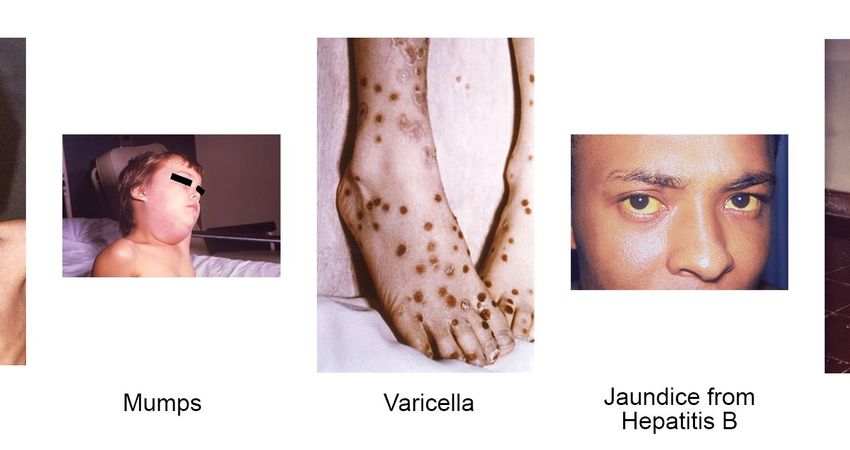
- Mumps – Virus; Symptoms: flu-like, severe swollen salivary glands; Dangerous complications (i.e. meningitis)
- Rubella – Virus; Symptoms: flu-like, severe rash and painful joints; Can lead to birth defects in pregnant women
- Hepatitis A – Eating/drinking contaminated food; Symptoms: 1-2 months of flu-like presentation
- Hepatitis B - Serious virus; Symptoms: jaundice, liver failure, severe joint pain, weakness, liver cancer
- Tetanus – Bacterial disease received from a wound; Symptoms: severe and painful muscle spasms
- Pertussis (Whooping Cough) – Bacterial disease; Symptoms: difficulty breathing; Serious, fatal complications, prolonged cough in adults
- Diphtheria – Bacterial infection; Symptoms: flu-like, difficulty breathing
- Polio – Highly contagious virus; Results in paralysis, mental deficits, and serious health complications
- Varicella – Highly contagious virus; Symptoms: blistering skin rash; Dangerous in pregnant women
- Meningococcal – Virus OR bacterial infection; causes swelling of the tissues around the brain and spinal cord; can cause permanent disability (mental and physical) and death.
PROTECT YOURSELF, PROTECT SOCIETY
For all of the above infectious diseases, PREVENTION is the only TREATMENT. Vaccinations are the single most effective method of infectious disease prevention. Since their introduction, vaccinations have overwhelmingly reduced the spread of life-threatening diseases and their associated death toll. Vaccinations for diseases such as measles, pertussis, and polio have reduced the worldwide incidence and the death rate from these diseases. Without vaccines, outbreaks occur, and deadly diseases can re-emerge, for example; to date 37 people in the European Union died from Measles in 2018.
ATHLETE + FEMALE = HIGHER RISK?
- Professional tennis players may be at a higher risk of infectious diseases due to increased exposure from frequent international travel and decreased immunity which may arise from competition, training, and the emotional and life stressors associated with being an elite athlete.
- NO vaccines exist for HIV, malaria, or Zika. Use preventative measures:
- HIV/AIDS: use barrier methods for all sexual encounters
- Malaria: prevent mosquito bites by using insect repellant, mosquito nets, and wearing long sleeves. If located in a high-risk area take prescribed antimalarial medications.
- Zika: pregnant women at greatest risk, prevent mosquito bites by using insect repellent that contains DEET
- Women are more prone to some infectious diseases than men. Human papilloma virus (HPV) is the most common sexually transmitted infection (STI) in the world.
- HPV is thought to be responsible for more than 90% of anal and cervical cancers, about 70% of vaginal and vulvar cancers, and 60% of penile cancers.
- HPV is very common, at least 50% of sexually active men and women are infected at some point in their lives.
- The vaccination Gardisil 9 protects against 9 strains. This vaccine can prevent most cases of cervical and vaginal cancer. It also protects against genital warts.
- It is recommended that ALL young women under the age of 26 get the three doses of the HPV vaccine.
- Speak with your health care provider if you’re interested in scheduling your HPV 9 vaccination series.
“Humans have always used our intelligence and creativity to improve our existence. After all, we invented the wheel, discovered how to make fire, invented the printing press and found a vaccine for polio.” — Naveen Jain, (Entrepreneur and Philanthropist)
MYTHS ABOUT VACCINES: BUSTED!
- Research shows there is NO connection between vaccines and autism in young children.
- Ingredients that are found in vaccines are NOT poisonous. They do NOT cause the actual illness.
- Vaccinations are overwhelmingly safe for most people. It is extremely rare for a vaccine to cause severe harm or death.
BENEFITS OF VACCINATION
- Vaccinations can protect you from diseases for life or for an extended period of time.
- Ask your doctor to review your vaccination status annually when you get your routine physical exam.
- Update your vaccinations when they are due to ensure effective disease immunity.
- Travel with a copy of your vaccination record, keep a photo on your smart phone.
- Your private physician should review your vaccination records and provide personalized vaccine recommendations based upon your country of residence and the countries you plan on visiting. Their recommendations are based on the World Health Organization recommended vaccines.
- It costs MUCH less to prevent a disease through vaccination, as only palliative treatment (providing relief from the symptoms, pain, physical stress, and mental stress) exists for these infectious diseases.
BE PROACTIVE! BE PREPARED! BE PROTECTED! PREVENTION IS THE ONLY PROTECTION.
The contents of the Health site are for informational purposes only and should not be treated as medical, psychiatric, psychological, health care or health management advice. The materials herein are not intended to be a substitute for professional medical advice, diagnosis, or treatment. Always seek the advice of your physician or other qualified health provider with any questions you may have regarding a medical condition. Never disregard professional medical advice or delay in seeking it because of something you have read on this site. Reliance on any information provided herein is solely at your own risk.
A special thanks to the author, WTA Medical Advisor, Dr. Walter Taylor