







French Open 2018: Stephens plans route through the traffic
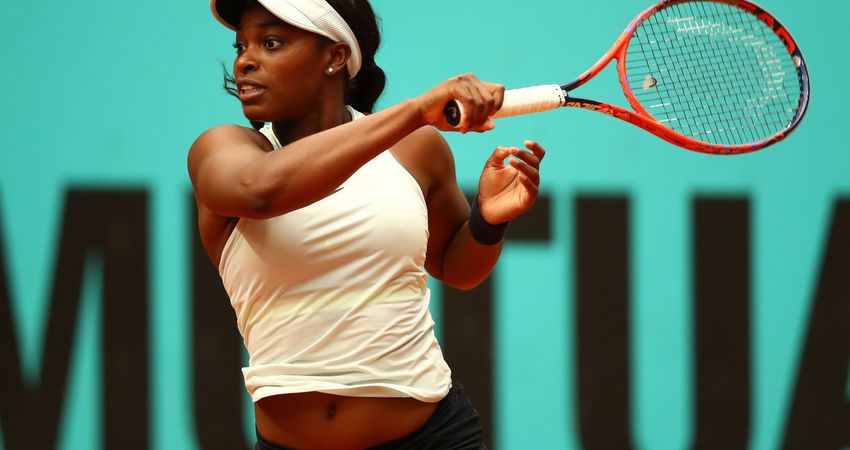
PARIS, France - To prosper at the French Open, you need to be able to slide in the baseline dust. You also require patience. And perhaps you also need the right mental approach for dealing with the heavy Paris traffic.
Traffic jams around the 16th arrondissement, and the resulting road rage, can derail your run at Roland Garros, according to Sloane Stephens' coach, Kamau Murray, who has told wtatennis.com how the US Open champion must "manage the traffic" in Paris. Only then will Stephens be in a calm, relaxed, positive mindset when she walks out to compete on the clay.
"Playing well in Paris isn't just about the conditions; it's about managing all the off-court stuff. Managing the days off, managing the traffic. If you can manage all that stuff, it can set you up for a nice, calm, patient match or it can rattle you," said Murray, speaking earlier this month, where Stephens will meet Karolina Pliskova in the third round.
"It's a little bit harder in Paris, compared to at the other Grand Slams, to create the right kind of environment that's going to set you up to have a nice, calm, relaxing tournament."
In addition to winning last season's US Open, Stephens has previously featured in an Australian Open semifinal, and made the quarterfinals at Wimbledon, but she has never gone beyond the fourth round at the French Open, a stage she has reached four times. But, according to Murray, Stephens has the game, and the maturity, to go much deeper in Paris this spring.
"I think Sloane has the game to win whenever she wants to. She can play on, and has had results on, all surfaces. If you manage all the other stuff, and get a workable draw, then she'll have an opportunity to win," said Murray.
Madrid RD. 2 ✅ pic.twitter.com/uhpXZ9SzoG
— Sloane Stephens (@SloaneStephens) May 7, 2018
Stephens' best results have come on hard courts, including winning this season's Miami title, but Murray said that she didn't have to change much about her game when playing on clay.
"I think it's just about being a little bit more patient. And also understanding that the court will always give you another chance. So there aren't really that many changes that you make other than the mindset. You also have to understand that while the court gives you another chance, it also gives your opponent another chance," Murray said.
"So opponents who might be a little easier matches on a hard court might be a little bit tougher on clay. So mentally you just need to be ready for that."
If Stephens has a "hairy" first-round or second-round match at French Open, she is now much better equipped to deal with "the battle".
"She's been to the fourth round of the French Open in four different years. I think she plays pretty consistently on clay. She's 25 now so mentally she's a lot stronger now than she was in the past. She's had a lot of tough battles over the past year so she's more mature and more ready for those first-round and second-round matches that can get a little hairy," Murray said.
"Early in tournaments, she's just more ready. She can deal with the battle and get through it and advance. If you look at the draws, there's always a match early on, if you make it through, the draw kind of opens up a bit, and now she's able to start thinking that way."
Until next time, Miami 🤙🏾 pic.twitter.com/iwPLpG5Ipw
— Sloane Stephens (@SloaneStephens) April 1, 2018
Stephens' results have been stronger inside than outside America. But Murray suggested that "people are making a big deal of this".
"This has everything to do with the schedule [and where she happens to be when she's in form]," Murray said.
"When you've had big results, like winning the US Open and winning Miami, you have to be ready at other tournaments for what's perceived to be an easy match. That match isn't going to be so easy. For some players, that might be their only shot at a Grand Slam champion. So you need to be ready early. And if you're not ready from day one, it can be tough. Every match is a little tougher," Murray said.
"So players are going to take their best shot at her. So it's about being ready and patient and understanding of the opportunity that the opponent has. So you're ready for that. I don't think that's different inside or outside America."