








After dream sendoff, Aliona Bolsova trades the professional grind for a future rooted in community
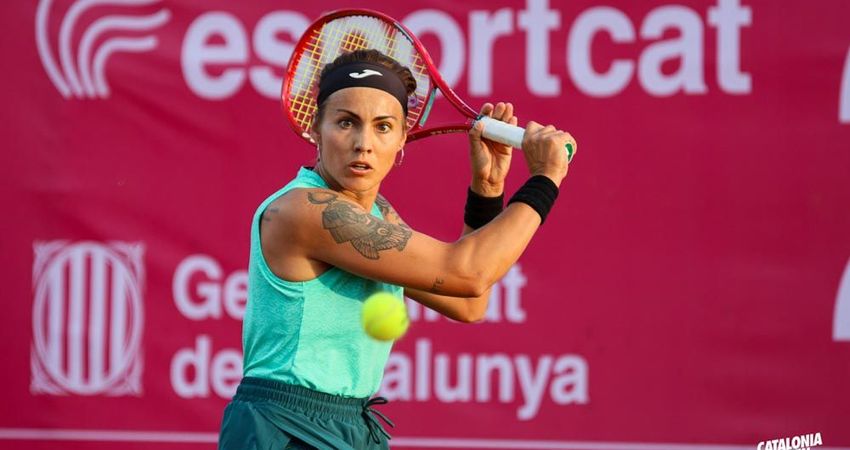
Going into the final tournament of her career at this week’s Catalonia Open Solgironès WTA 125, Aliona Bolsova wanted to feel joy.
It came together for the Spaniard. In 2019, she reached the fourth round of Roland Garros on her Grand Slam main-draw debut and climbed to a career-high No. 88 that same year.
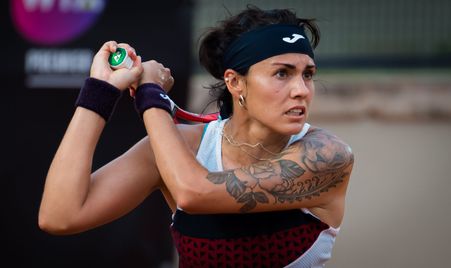
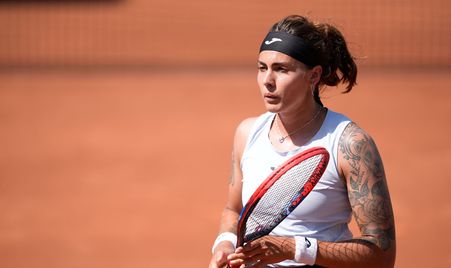
Bolsova stood out early. On court, her look shifted constantly -- bright blue hair, then neon pink -- alongside a growing collection of tattoos. Off court, she leaned into her intellectual and countercultural interests, recommending authors from Fatima El-Tayeb to Judith Butler on social media. Travel widened her perspective further.
"It's been a hobby of mine, visiting all the queer bookstores from around the world," Bolsova said via video call this week, singling out Gay's The Word in London, U-Tópicas in Mexico City and Hares & Hyenas in Melbourne in particular.
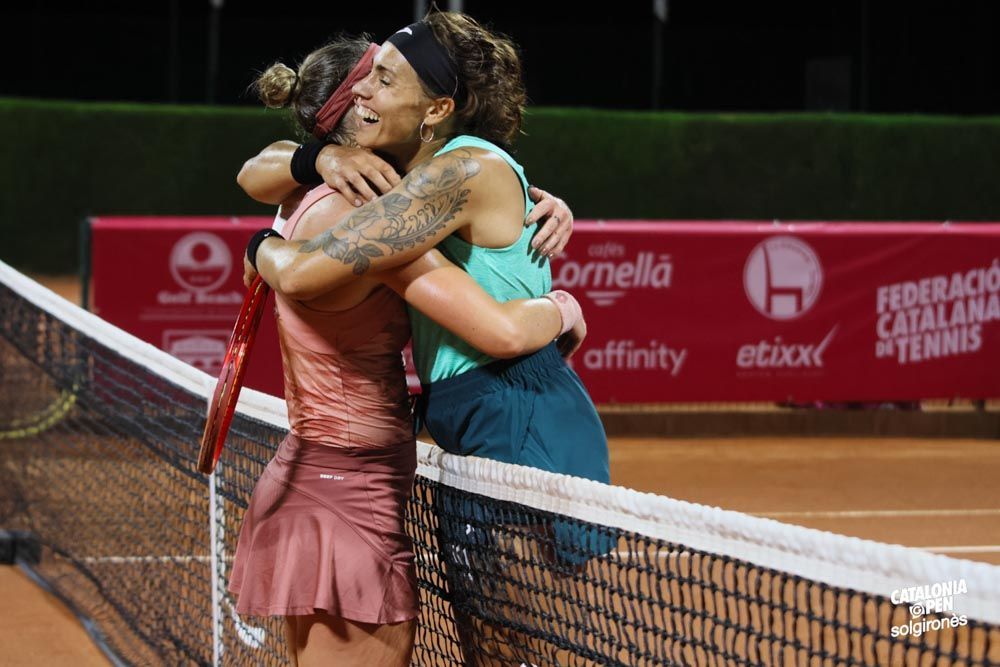
Last November, she announced that she would retire from tennis following her hometown event in La Bisbal d'Empordà. Granted a wild card, she played a magnificent match to upset No. 2 seed Peyton Stearns 6-4, 5-7, 7-6(4) in the first round. Her journey came to an end 6-3, 7-6(7) in the second round against her doubles partner and childhood friend Marina Bassols Ribera, someone she'd first met at the age of 10 and with whom she'd shared the ups and downs of an entire professional career.
Bolsova and Bassols Ribera had even done the La Bisbal draw ceremony together -- when their names were two out of only three remaining, they'd joked that they were going to play each other in the first round.
"I would never have dreamed this way of ending," Bolsova said. "It was the best way possible. I played at an amazing level. I made all the effort this month to try to be as best in shape as possible, because I don't want for them to give me a wild card take the spot from someone just for the sake of retiring at home. I wanted to give a show, to be with my friends and family watching and feel like how I've been all my career."
Bolsova did just that, and the crowd showed its appreciation.
"The fans were a bit like in Billie Jean King Cup," Bolsova said with a laugh. "They were super loud and making a show and singing songs. So I was just enjoying it so much, laughing, making jokes with the crowd as well."
Bolsova's state of mind in La Bisbal was an echo of another standout moment in the home stretch of her career -- a last-minute acceptance into Australian Open qualifying, a key goal of her 2025 season following shoulder surgery in 2024. Bolsova had resigned herself to missing it when a minor injury halted her momentum in November, and went on holiday in December with a view to "taking it easy" in January.
"I was pushing until the last minute for that," she said. "I was like, I've been playing all year since January, I need to go on holidays, I'm going to die. So I'm on holidays and suddenly the list is out and I'm like, 'Oh sh*t, should I start training?'
"I was in such a bad shape, but then I got into it and made a pretty decent match. I had zero expectations of being there so I just enjoyed the whole week like a little kid, you know."
Playing tennis with that freedom and joy has been a way for Bolsova to prove herself to herself. In her retirement announcement, she recalled that at the age of six, she had been so insecure and nervous in one of her first tennis lessons that she had wet herself. Nearly two decades on, she feels she's accomplished enough to make her six-year-old self proud.
Here's more from wtatennis.com's conversation with Bolsova:
What made you decide to call time on your career?
I kind of decided it last summer, but I didn't announce it until November. My goal was to make it back to the Slams, so I didn't want to lose focus on saying I was going to retire. But it's basically that I feel that I'm ready to start another life. I'm really homesick. I really want to be close to my friends and family and start doing something for others.
I've been doing tennis for myself, being selfish for so many years because you need to be selfish to be a professional tennis player in many ways. So I really feel like I want to give something back to the community now, and that I want to make roots here where I live and start to build a life here.
I was already not giving my 100%. I was at 80-ish last year. So I was like, I do it 100% or I don't do it.
You've said rankings and trophies were never your top priority, and that's why you could never commit 100%. What did motivate you?
To grow as a person, first. But what made me come back -- because I went to college and I didn't think I would play professionally again -- was that I wanted to be financially self-sufficient. For me I understood that the fastest way to do it was not through college but through tennis, because if it goes well you can be independent financially pretty quick. I mean, it's tough, it has to go really well, but I was lucky that I did that.
So I never aspired to be top whatever or to make tonnes of money, but I just wanted to have my stability and then do something I like from there. That was, I guess, my main motivation.
What are your memories of Roland Garros 2019, where you beat Vera Zvonareva, Sorana Cirstea and Ekaterina Alexandrova to make the second week?
It was the first Slam main draw, but I already played two qualies before so my only goal was to go through qualies. When you're in Slam qualies the biggest thing is to be in the main draw, so I'd never aspired to anything beyond that. When I passed the qualies I was already in a dream, and then for some reason I kind of went on dreaming for another week.
It was career-changing as well, because I made it to the Top 100 and got the chance to play many other main draws in a slam and bigger WTA tournaments. It was the first time I believed I could be a professional tennis player, and I proved to myself that.
Apart from that tournament, what are the matches that you're most proud of in your career?
Probably matches in smaller tournaments when you're struggling through lack of confidence, you drop a bit in the ranking. Then all the effort it takes to come back and win those matches that you're supposed to, or that ranking-wise you need to go to the smaller ITFs and grinding there.
I would say I'm proud of lots of those matches. Not one in particular, but those matches where you just cannot feel the ball at all, that the court is so small and you're just struggling so much to put the ball in and somehow you find the strength to just win those matches that are absolute sh*t.
When you're playing good it's amazing, a great feeling. You get great wins, Top 100 wins, Top 50 wins. I do remember a lot of those matches where I got good wins against great names, but at the end I'm most proud of the smaller stuff.
Is there one match that you still think of as the one that got away?
For sure, for sure there are many. I do remember one that hurt specifically. It was the [2019] US Open second round against Cirstea as well [Bolsova lost 3-6, 6-4, 6-2]. I was up a set and 4-3, 40-15, something like that. Then I missed a ball -- they didn't call it, she challenged and it was this tiny bit out. That would have put me in the US Open third round, which was also a big thing.
Your interests in literature, queer theory and feminism have made you stand out on tour. How did you develop them?
I was very lucky because one of my first coaches, Ana Alcazar [former WTA No. 119], was the one that introduced me to all of this when I was 17. Then I also started living in Barcelona where I started joining the LGBTQI community and went all these places and book stores where they had plenty of books. With my coach, every time we'd go to dinner we used to debate and talk about readings, books, authors, ideas.
So I guess with my team it was always this little place where we could get away from tennis and just talk about other things that matter a lot in this world. And then of course there are many players also who share the same interests but maybe don't post them as much, so I did always also find my community inside tennis.
Are there any particular books or authors that particularly mean a lot to you?
There's many. It's tough to just pick one. I never stick to just one particular author. I try to read a bit of many different ones and then put them together and see how that gives you contrast. It's a bit of a historian thing, to get many things and contrast them.
But I really love Colette. I think her novels and short stories are amazing, and so groundbreaking for her time.
The WTA, of course, has a long history of LGBTQI representation, both among its players and its fans. And it's also an interesting sport to think about vis-a-vis gender presentation and fashion.
Yeah. And I think with Billie Jean King, this representation is at the top. She's there standing for all of this and it's amazing to have a big name like that for us. And yeah, there's a lot of stereotypes as well with how you look -- which I think is changing. Before, maybe 10 or 20 years ago, players would always dress in dresses and look super nice and stuff. Now there's a great variety. We all have our style, our ways of dressing. Some keep to the dresses and look amazing. Some others are more masculine and dress more with the shorts. All of that now is fine and accepted. I think it's amazing to just have a bit of everything. Diversity is what matters.
You've said that you want to give back to the community now. What's next for Aliona Bolsova?
One of the things I want to do as a personal project is to try to write a book. Not about myself, but about how power relations in tennis happen between players and coaches. There's many, many situations. Big age gaps, relationships where there's a lot of abuse of power.
Unique circumstances happen. Maybe in other sports you travel with a team, you share more with others. In tennis you can start travelling with a coach when you're 12 or 13. Underage girls have been in very sh*tty situations. It's something worth talking about so it can never again happen in the future. These relations can change and be more healthy.
Then I want to explore if I want to keep studying for a Masters or be a teacher. I really like teaching. I'm not sure if it will be in tennis or in what I've been studying [Bolsova is currently studying history, geography and history of art at the University of Barcelona].
Do you feel lucky that you have a coach who, instead of doing that, taught you about politics and queer theory?
It's funny because Ana talked to me about that, and I got introduced into that world. But then, when I went to college, I did get into one of these relationships. I'm not ashamed of saying it, but I did date a coach who was 20 years older than me. And I got myself into a situation...
I was super young, I was 18, and I thought I was the smartest, the most feminist, the most aware person in the world. And somehow I still got into that dynamic. That was really, really painful for me, and it took me a long time to get out of that. And then Ana came back into my life and helped me rebuild from the ashes, and from everything that got broken inside of me because of that relationship.
Sometimes we think that we are the strongest women, that we know everything, and still somehow get into these toxic patterns. But we have each other to get out of that, so that's the nice thing.
We've talked about the matches that you're most proud of, but maybe that's the thing that you're most proud of in your career -- that ability to rebuild.
Yeah, 100%. The personal part and what you overcome personally is, I think for every tennis player, what you are most proud of.
Ultimately, how would you like to be remembered?
I really want to be remembered for my good character, for smiling and being happy, because I did have some periods in my life where I was a bit darker and suffering a lot. But I also had this bright side inside of me which was always smiling and enjoying. I did hear this last week a lot of people telling me that definitely they are going to remember me for my smile and my enjoyment. That was so nice to hear.