







Selekhmeteva upsets Badosa in Australia; Inglis survives three-hour battle
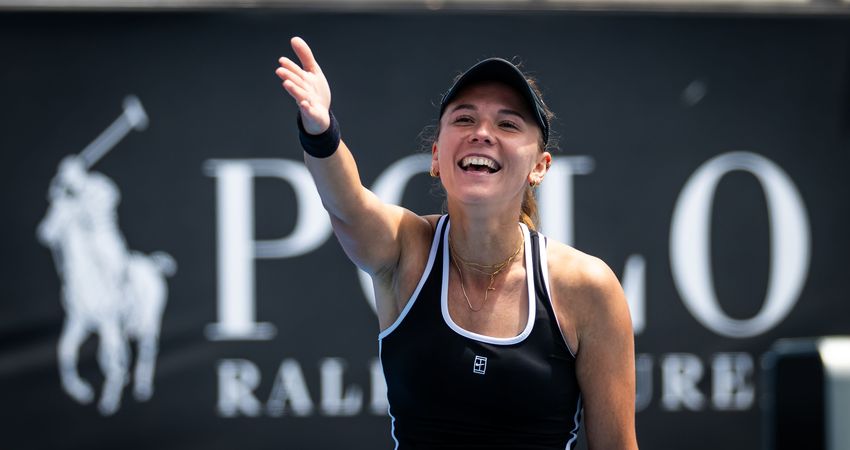
Oksana Selekhmeteva saved the best for last to seal her 6-4, 6-4 upset of No. 25 seed Paula Badosa in the second round of the Australian Open.
The 23-year-old, ranked No. 101, found a spectacular angled backhand pass to foil last year's semifinalist at net, falling to her knees as she celebrated reaching the third round of a major for the first time in her career.
Australian Open: Scores | Draws | Order of play
It's a result that's been a long time coming for Selekhmeteva, who was a Top 10 junior and the two-time girls' doubles Grand Slam champion -- the US Open 2019 with Kamilla Bartone and Roland Garros 2021 with Alexandra Eala.
Just a year after the latter, she qualified for her first professional Grand Slam main draw at Roland Garros 2022 and two months later went on to reach her first WTA quarterfinal in Prague. The left-hander's flashy, creative game -- all well-disguised drop shots and double-handed slices -- seemed on the brink of joining the WTA Tour Driven by Mercedes-Benz.
But in 2023, disaster struck. A left shoulder injury would sideline Selekhmeteva for seven months. Having risen as high as No. 138 in 2022, by February 2024 her ranking had fallen to No. 904.
"I've never had such a serious injury, and it was a horrible experience," Selekhmeteva told SuperTennis last year. "It can happen, and you know it, but facing it all with a positive attitude isn't easy. You have to be able to believe in yourself at all times, even when you're feeling down."
Selekhmeteva’s comeback gathered momentum in 2025, highlighted by WTA 125 titles in San Sebastián and Rovereto and a first entry into the Top 100 in October. That upward climb has continued this week: her 6-3, 3-6, 6-0 win over Ella Seidel marked her first Grand Slam main-draw victory, and her defeat of Paula Badosa delivered the first Top 30 win of her career.
Selekhmeteva trained in Spain from the age of 15 and was for several years based at the TEC Carles Ferrer Salat, near Barcelona -- an academy known for blending high-performance training with a broader social mission. During that period, she worked alongside fellow WTA players including Camila Osorio and Kaja Juvan. After reaching her first WTA 125 final in Rome last year, she credited the foundation built during her time at the academy
"When I was six, a tennis coach told me I wasn't good at it," she said in her on-court speech. "I tried singing and dancing, but then I chose tennis. My social commitment? At TEC, I began to take an interest in the world's major issues, and we want to make our planet a better place. What's happening in our society requires us to take steps to build a better and more sustainable world. We athletes must seize every opportunity to make our voices heard."
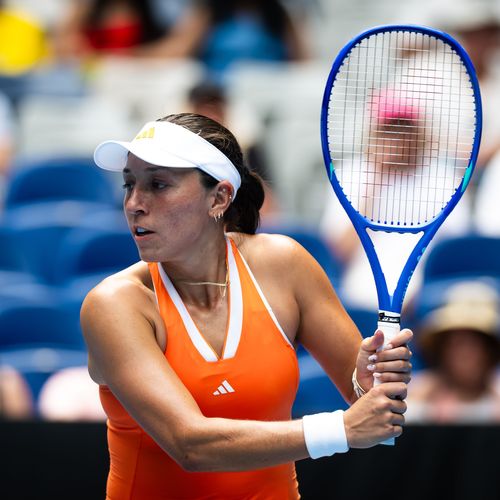
Selekhmeteva will next face a Top 20 player for the first time in her career when she takes on No. 6 seed Jessica Pegula in the third round.
Marathon woman Inglis notches another three-set win
Two days ago, local fans could relish the best collective performance by their home players in 34 years: for the first time since 1992, six Australian women had made the second round in Melbourne.
It didn't last. Over Wednesday and Thursday, five of them -- Talia Gibson, Storm Hunter, Ajla Tomljanovic, Priscilla Hon and Taylah Preston -- all lost their second-round matches. It fell to the last up, and the second-lowest ranked of the squad at No. 168, to deliver redemption.
Qualifier Maddison Inglis did just that, overhauling Laura Siegemund 6-4, 6-7(3), 7-6[7] in 3 hours and 20 minutes, the second-longest match of the tournament so far. The 28-year-old Inglis was unable to serve out the win at 6-5 in the second set but escaped from 5-3 down in the third.
That pattern has defined Inglis’s tournament so far. For more than a week, she has lived on the margins. In her opening qualifying match last Tuesday, she saved two match points against Leyre Romero Gormaz -- first by landing a forehand just inside the line, then benefiting as the Spaniard narrowly missed on her own attempted winner. Inglis ultimately came through 4-6, 7-6(4), 6-2 in 2 hours and 21 minutes.
"I thought about that, actually, the last couple of matches," Inglis said after defeating Siegemund. "I kind of have a second chance. Yeah, I was really lucky to get through that first match. Tennis is so crazy sometimes. I just kind of kept fighting. Everyone around me said, 'Keep believing and just back yourself.' They really helped me get to this stage."
It set the tone for what was to come. She needed 2 hours and 41 minutes to defeat Claire Liu in the second qualifying round 7-6(6), 2-6, 6-4 after saving two set points in the first set. In the first round of the main draw, she had to recover from losing a 4-0 second-set lead -- and two match points in the ensuing tiebreak -- to hold off compatriot Kimberly Birrell 7-6(6), 6-7(9), 6-4 in 3 hours and 1 minute -- so far the third-longest contest of the Australian Open.
Inglis's only straight-sets match in the five she's played here this year was her final qualifying round, 6-4, 6-4 over Tamara Korpatsch -- and even that took more than two hours to seal. In total, Inglis has spent 13 hours and 24 minutes on court so far to advance to the third round of her home Slam for the second time -- she previously reached that stage in 2022.
"There have been some long and tough matches," she said. "I actually didn't know I had that in me at the moment. Yeah, it's crazy once you get out there, once you get playing. You want it so bad, it's crazy what you can do."
Inglis will face No. 16 seed Naomi Osaka next.