









'We wanted the tournament to stand for more than tennis': 40 years of Strasbourg
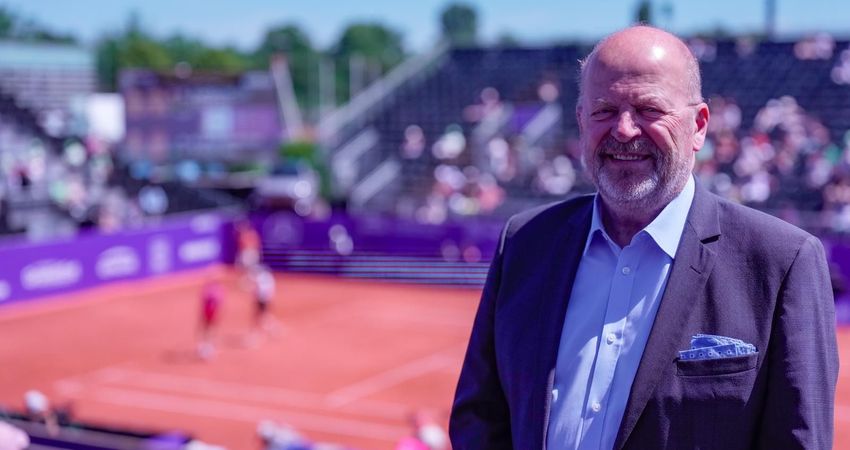
As the Internationaux de Strasbourg celebrates its 40th anniversary, Tournament Director Denis Naegelen reflects on the event’s evolution and the values that continue to shape its future.
Born and raised in the Strasbourg region, Naegelen grew up playing tennis locally, and achieved an ATP Doubles ranking of 131, before building a successful career in sports marketing and hospitality, working across major international events including the 2012 London Olympic Games and Six Nations rugby.
Seventeen years after leading a successful bid to keep the event in its home region, Naegelen reflects on unforgettable moments, and why his purpose-driven vision of sustainability, health and social impact is central to Strasbourg’s identity.
Q: Forty years on, what defines the identity of the Internationaux de Strasbourg?
The identity of the tournament has evolved a lot over the last 40 years. It began in 1987 as a passionate local initiative, created by volunteers from the regional tennis league here in Alsace who wanted to bring an international women’s event to Strasbourg.
I took over the tournament in 2010 following a public bid after the French Tennis Federation decided to sell the event, largely due to the challenge of organising another event just before Roland Garros. For me, it was personal. I was born and educated in the region, I grew up here, learned tennis here and even won some local tournaments at under 12, 14, and 16 levels. I didn’t want this important event to leave Strasbourg.
From day one, I knew I wanted to do more than simply organise a tennis tournament. Of course, elite tennis is central, but from the beginning my vision was to build an event that also promoted important values and stood for something bigger.
First, a world-class tennis event. Second, a sustainable event. Third, defending women’s rights. That is still the DNA of the tournament today, and every year we try to promote subjects that are important for society.
As a former player who grew up during the era of Billie Jean King, becoming part of the WTA felt like a responsibility. I wanted the tournament to reflect values that matter, and that remains the DNA of the event today.
Q: How did you begin transforming the tournament?
When I took over, the event was located around 20 kilometres outside Strasbourg. With my background in sports hospitality, I believed the tournament needed to be at the heart of the city to reach its full potential.
I wanted to place the Centre Court in front of the European Parliament, the heart of Europe, because it felt symbolic for an international women’s event and made the tournament much more accessible for fans and business guests.
We moved here in 2011, the year after I took over, and it’s been our home ever since.
Q: Which matches or player performances remain unforgettable for you?
There have been hundreds of matches over the years, but some really stay with me.
Anastasia Pavlyuchenkova’s victory in a dramatic final against Dominika Cibulkova in 2018 remains unforgettable because it was so intense, with multiple match points. Angelique Kerber’s title win in 2022 was also very special.
Beyond the tennis itself, our 2011 champion Andrea Petkovic left a big impression on me because of her personality. She was always smiling, always brought energy and positivity, and created a genuine connection with people around the tournament.
That’s one of the reasons I still love doing this. Every year brings new personalities, new stories and new memories.
Q: Tennis has changed dramatically over the years. What developments have stood out most to you?
The spectator experience has changed enormously. Today, fans expect much more than simply watching matches, they want to feel part of something meaningful.
For us, sustainability became a major focus. We wanted the tournament to inspire people in their everyday lives and show that even small changes can make a difference.
For example, we created a tennis ball recycling programme where fans could bring in used balls and exchange them for new ones. The majority of our attendees play tennis themselves so this felt very meaningful, that they could get involved in. Since launching it, we’ve recycled around 30,000 tennis balls.
Throughout the venue, we also share messages encouraging more sustainable habits, whether that’s using public transport, walking manageably shorter distances or thinking differently about consumption. Around 80 percent of people drive alone in their cars, so if we can help promote new ways of thinking and living, it can have a real impact. We want the tournament to become a platform for positive change.
Q: This year, the tournament launched a new “Tennis Health” programme. Why was that important?
I believe a tournament is also a media platform, and when you are a media platform, you have an opportunity, and a responsibility, to promote important messages.
Health affects everyone, and tennis is an incredible sport for both physical and mental wellbeing. I discovered a local initiative in Strasbourg called “prescri-mouv”, where doctors can prescribe physical activity to patients dealing with issues such as obesity or diabetes.
Many sports were already included in the programme, but tennis was not. I met with the organisers and proposed using the platform of the tournament to help promote “Tennis Health” and integrate tennis into the programme.
Last week, in collaboration with the Bas‑Rhin Departmental Tennis Committee (CD67) and the Ligue FFT Grand Est, we invited 40 doctors and 40 tennis club presidents to the tournament to help build stronger connections between tennis and public health. Now, doctors can prescribe tennis sessions through certified clubs with trained coaches. The goal is not competition, it’s movement, wellbeing and accessibility.
What makes Strasbourg unique is that these sessions can also be reimbursed through the local health system and the city, meaning they are free for participants. I believe this is exactly the kind of initiative sport should support, and part of our responsibility as an event.
Q: Why was it important to create new opportunities for young French players through the W15 event?
When Strasbourg became a WTA 500 tournament, the entry level became much higher and it became harder for young French players to enter the draw and gain ranking points.
I felt it was important for us to help create those opportunities.
Travelling internationally to play smaller tournaments is very difficult when you are 15 or 16 years old, so we created a pathway locally through a pre-qualification event and now a W15 tournament organised with a nearby club.
The winner receives a wildcard into qualifying for Strasbourg, but beyond that, the goal is to help young players gain experience and earn their first ranking points closer to home.
Q: Sustainability has become a major focus in global sport. Why is it such a priority for Strasbourg?
We have changed over 100 processes within the production of the event. The main goal I gave my team was simple: reduce our impact in every decision we make. Can it be recycled? Can it be reused? Can we reduce plastic, or our carbon footprint?
When we first measured our carbon footprint in 2010, probably one of the first sporting events to do so, we realised that around 70 percent came from mobility and transportation. That changed everything for us and became our number one focus.
This included transportation for the organisation, the public, the players and suppliers. We focused heavily on encouraging public transport, car sharing and train travel. Fans who arrive using public transport receive ticket discounts, while those arriving with four passengers in one car can access free parking areas nearby.
We also partnered with railway companies to create combined train, tram and tournament ticket offers to make sustainable travel easier and more affordable for fans.
At the same time, we transformed our operational processes. We eliminated almost all plastic, prioritised recycled and reusable materials, and worked closely with caterers to source seasonal and regional food.
We set very high standards and verify them closely, even including clauses in contracts that allow us to fine suppliers if they do not meet sustainability requirements. It may sound tough but it works!
I recently had lunch with our caterer, who actually thanked us for forcing them to change. Because of the standards we introduced, they became one of the first companies in the region to offer sustainable catering solutions to clients across weddings, private events and corporate functions. They completely transformed their business model, which makes me very proud.
Fifteen years ago, these decisions were unusual and often more expensive. Today, the industry is changing and sustainability is becoming standard practice.
One statistic I’m especially proud of is that despite significantly increasing attendance over the years, we have reduced the tournament’s overall carbon footprint by around 80 percent since our first assessment. It’s important, and motivating to our entire team to see the changes we are working hard on having this overall effect.
Q: What advice would you give other tournaments wanting to make meaningful sustainability changes?
First, they are welcome to call me. I always enjoy speaking with and hosting fellow tournament directors to show them what we are doing and how we started.
The good news is that many things are easier today than they were 15 years ago. Sustainable materials, recycled paper, natural inks and environmentally responsible suppliers are now much more available and affordable.
The most important thing is simply to start. Once you begin questioning your processes and making small changes, the momentum grows naturally, and your can track your progress.
Q: Finally, if you had to describe the future role of the Strasbourg tournament in one sentence, what would it be?
To continue being useful for my region.