




US Open Week 1 awards: The comebacks, tiebreaks and late-night turns
NEW YORK -- The city that never sleeps was put to the test on opening night. Venus Williams and Sofia Kenin did not step onto Arthur Ashe Stadium until 12:13 a.m., then played well past 2.
By Saturday, the tournament had come full circle. Naomi Osaka and Elise Mertens were still trading blows on Louis Armstrong Stadium as Iva Jovic and Alexandra Eala played a third set of their own on Ashe. Both matches stretched late into the evening.
Between those bookends came three-tiebreak marathons, a comeback from 5-0 down and a doubles match that appeared to be over -- until it wasn’t.
Before the second week begins, we’re giving some of the US Open’s most memorable Week 1 matches their due, one superlative at a time.
The clear-your-schedule award: An ode to the three-hour matches
The opening week gave us three women’s singles matches that went beyond three hours, and all three went the distance. The longest arrived on opening day.
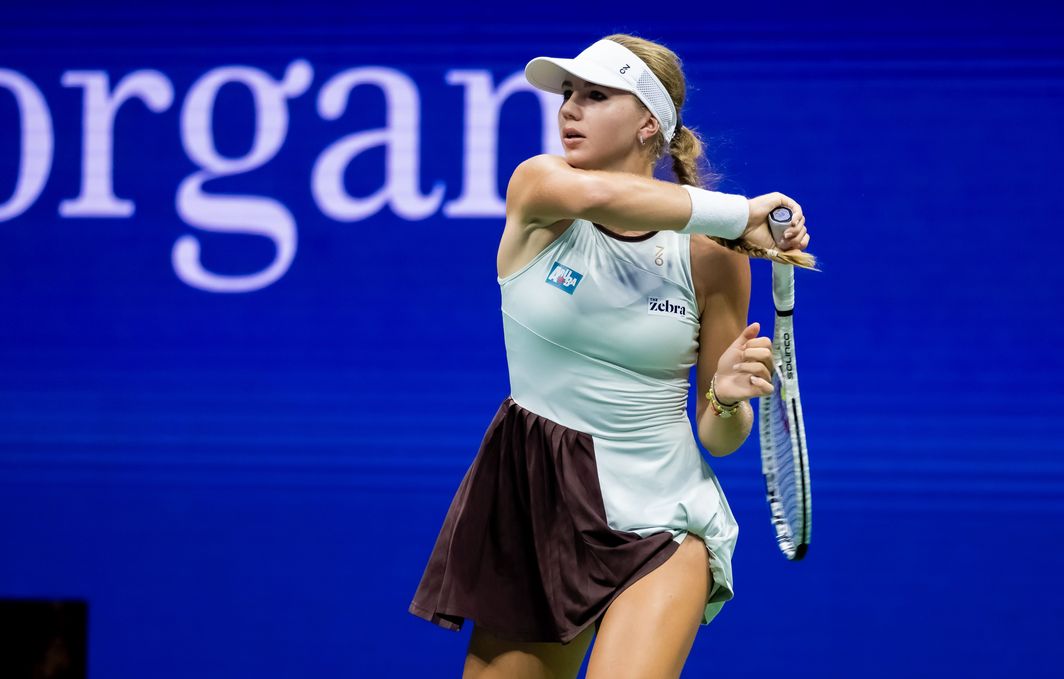
Polina Iatcenko defeated Renata Zarazua 4-6, 6-4, 7-6 [7] in 3 hours, 27 minutes. Zarazua led by a set, but Iatcenko fought back to take a deciding tiebreak that went to 9-7.
On Thursday, Cristina Bucsa’s 7-6 (6), 6-7 (0), 7-6 [6] Court 6 marathon over Himeno Sakatsume lasted 3 hours, 1 minute. Bucsa took the first tiebreak, Sakatsume answered by blanking her in the second, and Bucsa finally prevailed in a third tiebreak after two match points slipped away at 5-4 in the deciding set.
Then, on Saturday, Iva Jovic’s 7-5, 3-6, 7-5 win over Alexandra Eala ran 3 hours, 3 minutes.
And not to be forgotten: Serena and Venus Williams’ 6-3, 6-7 (6), 7-6 [7] doubles return also crossed the three-hour mark. More on that below.
Notable takeaway: Iatcenko-Zarazua was the longest women’s match at the US Open since Maria Sakkari edged Bianca Andreescu in 3 hours, 30 minutes five years ago.
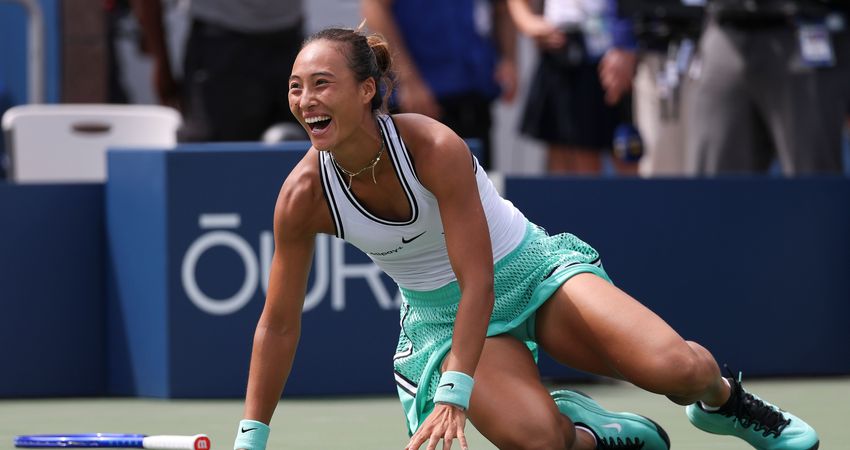
The no-lead-is-ever-safe award: Zheng Qinwen def. Madison Keys 1-6, 7-6 (3), 7-5
It felt like a done deal.
Keys was up 5-0 in the third set. She had a match point at 5-1. She was one game away from what would have looked like a routine finish after losing the second-set tiebreak.
And then …
The former Olympic gold medalist: a) erased the match point, b) won seven straight games -- including 28 of the final 38 points -- and c) turned a 5-0 deficit into one of the tournament’s wildest reversals.
Notable takeaway: Zheng won three qualifying matches just to reach the main draw, then went the distance in each of her first three main-draw matches to reach the second week. At No. 121, she is the lowest-ranked singles player to reach the US Open Round of 16.
The match-before-the-match award: Madison Keys def. Anna Bondar 5-7, 6-4, 7-6 [5]
Keys had already survived one of the week’s better tests before the match against Zheng.
Bondar took the first set, and neither player gave much away from there. Keys steadied herself in the second, then escaped a deciding-set tiebreak to reach the third round.
It was not the Keys match everyone was still discussing a round later, but it was the reason she had the chance to be part of it.
Notable takeaway: Keys saved five match points in the win.
The reunion-that-got-away award: Chan Hao-ching and Maya joint def. Serena Williams and Venus Williams 6-3, 6-7 (6), 7-6 [7]
Serena and Venus Williams were back together at the US Open, and Arthur Ashe Stadium was ready for the long-awaited return to the Big Apple.
It was their first Grand Slam doubles appearance together since the 2022 US Open, bringing the 14-time major champions back to the stage where they won two of those titles.
This was high-quality tennis and anything but a ceremonial nostalgia tour.
After stealing a tight second-set tiebreak on their fifth set point, the sisters raced out to a 5-0 lead in the deciding match-breaker.
The next round felt all but settled until Chan and Joint won nine of the final 11 points, taking the match and changing the mood inside Ashe just as quickly.
Notable takeaway: This marked the second straight match-tiebreak loss for Serena and Venus since reuniting as a team, following their narrow setback to Marta Kostyuk and Peyton Stearns in Cincinnati.
The Saturday night crosscourt showcase award: Naomi Osaka def. Elise Mertens 6-3, 3-6, 7-5; Iva Jovic def. Alexandra Eala 7-5, 3-6, 7-5
If there was ever a night to fire up that Multiview option on the big screen, this was it.
Osaka and Mertens were playing a third set on Louis Armstrong Stadium while Jovic and Eala were doing the same on Ashe, each match moving back and forth long after most of the grounds had emptied.
On Armstrong, Osaka was a set and a break ahead before the match changed. She struggled with her forehand, took treatment for her Achilles and watched three match points disappear before Mertens missed on a fourth.
On Ashe, Jovic and Eala traded momentum all night. Eala led 4-2 in the third set, but Jovic worked her way back to take a match that had swung repeatedly between two of the game’s most compelling young players.
Notable takeaway: Both winners finished Saturday night taking a 3-0 advantage against their opponents in 2026 -- and both did it in 7-5 third sets.
The copy-and-paste award: Iga Swiatek def. Marie Bouzkova 7-6 (3), 7-6 (3)
The scoreline had symmetry to it. The match itself was far more complicated.
Iga Swiatek's mental fortitude 🧠
— US Open Tennis (@usopen) September 5, 2026
The 2022 champion digs deep to defeat Bouzkova 7-6, 7-6! pic.twitter.com/USHISnQNtJ
Bouzkova pushed Swiatek through two tight sets and had three set points while serving at 6-5 in the second. Swiatek found her best tennis when she needed it, then controlled both tiebreaks to reach the fourth round.
Notable takeaway: Swiatek overcame a 3-0 deficit in the second set and saved three set points before closing out the match.
The one-they-came-to-see award: Taylor Townsend def. Diana Shnaider 6-2, 6-7 (3), 6-3
Townsend had a vocal crowd behind her throughout, and she gave them the kind of match they had come to see.
She looked in control after taking the first set and leading 5-3 in the second, but Shnaider pulled back to take the tiebreak on her seventh set point and force a decider.
Townsend regrouped in the third, winning the final three games to close it out.
Notable takeaway: Taylor Townsend reached the US Open Round of 16 for the second straight year and the third time overall -- her only three fourth-round appearances at a Grand Slam. Townsend would eventually fall to Aryna Sabalenka.