


Five things we learned: What separated Rybakina from Sabalenka in the Australian Open final
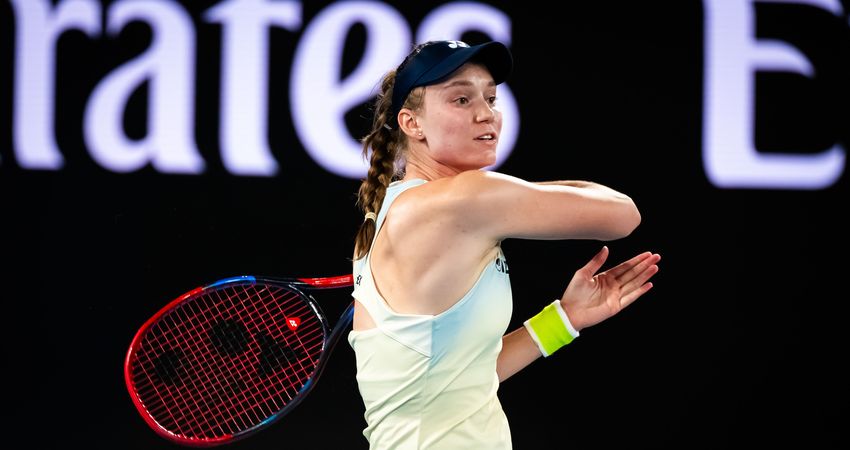
Three years after she won her first Grand Slam singles title at Wimbledon, Elena Rybakina was bounced in the third round at the All England Club. Outside the Top 10, scrambling to find answers, she seemed lost.
Seven months later, Rybakina is found.
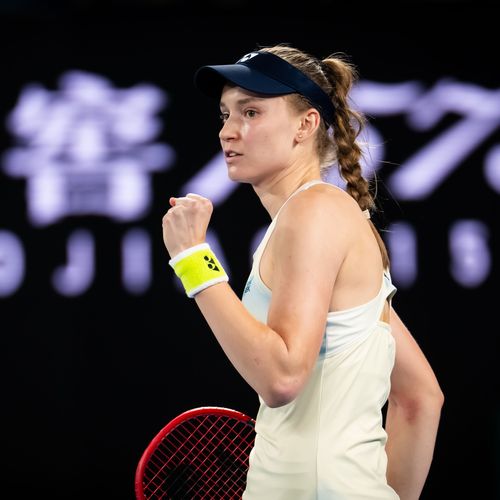
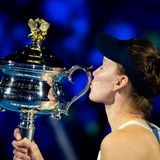
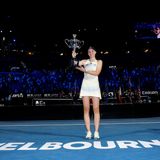
After Saturday’s epic 6-4, 4-6, 6-4 victory over World No. 1 Aryna Sabalenka, she is now a two-time major champion. Rybakina, down 3-0 in the final set, rallied to win six of the last seven games. No one on the WTA Tour Driven by Mercedes-Benz has won more than her 37 matches since that Wimbledon loss.
In recent years, were there moments when she wondered if she’d ever win that second Grand Slam?
“I always believed that I can come back to the level I was,” Rybakina said afterward. “Of course, we all have ups and downs. Like I think everyone, I thought or maybe I will never be again in the final or even get a trophy, but it's all about the work.
“I think we've been putting a lot of work in with the team, and they were also very supportive. In the moments when I was maybe not that positive, they would be helping out on the side. Of course, after some wins, big wins against top players, then you start to believe more, you get more confident.”
In her final three matches at Melbourne Park, Rybakina sent off No. 2-ranked Iga Swiatek, No. 6 Jessica Pegula and No. 1 Sabalenka, becoming the first Australian Open champion to beat three Top 6 players in 18 years. Rybakina also ended Sabalenka’s 11-0 start to the season.
“She lost her focus, I was 3-love,” Sabalenka said. “I lost my focus, it was, like, 3-4. She did a better job in handling that pressure moment, that's for sure.”
Zoom out to last year’s WTA Finals, and the 26-year-old who represents Kazakhstan is the first player to beat No. 1 and No. 2 in consecutive events in which they both appeared in the 51-year history of the PIF WTA Rankings. Including 2023 Indian Wells, she’s now done it three times in her career.
When she broke through at Wimbledon, Rybakina said, she got very little sleep the second week.
“Final I don't even talk, like, how many emotions and how many thoughts was going through my head,” Rybakina explained. “Yeah, it was really stressful, I will say, Wimbledon.
“I think with the experience, with the years on tour, I learned a lot. Later on, of course, you have same emotions. You want to win, but it's kind of different. I was managing to sleep well here, and that's a good thing.”
A very good thing, indeed. Here’s a handful of takeaways from the final of the season’s first Grand Slam:
Rybakina’s ability to meet the biggest moments head-on is a defining trait
Rybakina will be No. 3 when the new rankings come out on Monday, but this was her ninth career victory over the player ranked No. 1. Only Venus Williams (15) has more among active players, but no one since the rankings were instituted in 1975 (minimum 10 meetings) has a better winning percentage than Rybakina’s 9-6 (.600). Additionally, Rybakina has now won 10 consecutive matches against Top 10 players. This is the working definition of rising to the challenge.
For all the firepower on court, the final was decided by almost nothing at all
In so many ways, this final couldn’t have been closer. Both players won 48 percent of their critical second serves and Rybakina had a 76-75 edge in first-serve winning percentage. In the end, Rybakina broke Sabalenka one more time (3-2). Each player won 92 points.
Another final, another step forward for Sabalenka -- even in defeat
A white towel covering her head, Sabalenka sat on her changeover chair while Rybakina shared hugs with her team. It was a bitter, bitter result for Sabalenka, who lost finals at last year’s Australian Open and Roland Garros to, respectively, Madison Keys and Coco Gauff. Despite winning the US Open, Sabalenka has repeatedly referenced those defeats, her loss of composure, and vowed to learn from them.
“Overall,” she told reporters, “it was much better than last year, two finals I lost. Level-wise and decision that I was making and the way that the mentality was throughout the whole match that I was still there. I made huge improvement on that, and I still lost it. But it's OK. I feel like I'm moving towards the right direction.”
Cheers to the champ 🥂#AO25 pic.twitter.com/jylguYhpmH
— wta (@WTA) January 31, 2026
The match turned when court position -- and conviction -- shifted by a few crucial steps
Tennis is ultimately about geometry. Who can play closest to the baseline and create the best angles? In the first set, Rybakina kept Sabalenka at bay. But in the second, Sabalenka began seeing her serve better, crept in and controlled the action. Sabalenka had won five straight games when Rybakina’s team called for more energy.
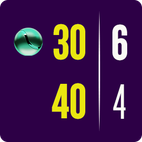
Rybakina responded by inching forward and adopting a more aggressive approach; her serving picked up and so did her baseline play. Serving for the match, when it’s most difficult to stay loose and hit out, Rybakina produced back-to-back 86 mph forehand winners and finished it off with an ace.
The rivalry may be tight on paper, but the finals tell a different story
Rybakina narrowed her head-to-head deficit against Sabalenka to 8-7. But … she’s won four of their five finals. Rybakina and Swiatek have scored four wins over Sabalenka in finals -- most by active players against a single opponent.