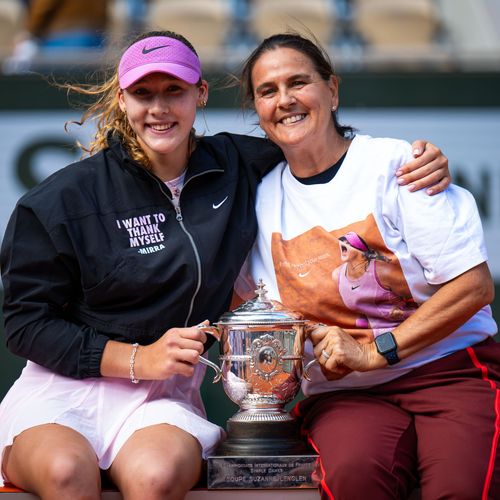








Starting in Sweden, Thomas Hogstedt's coaching legacy is now worldwide
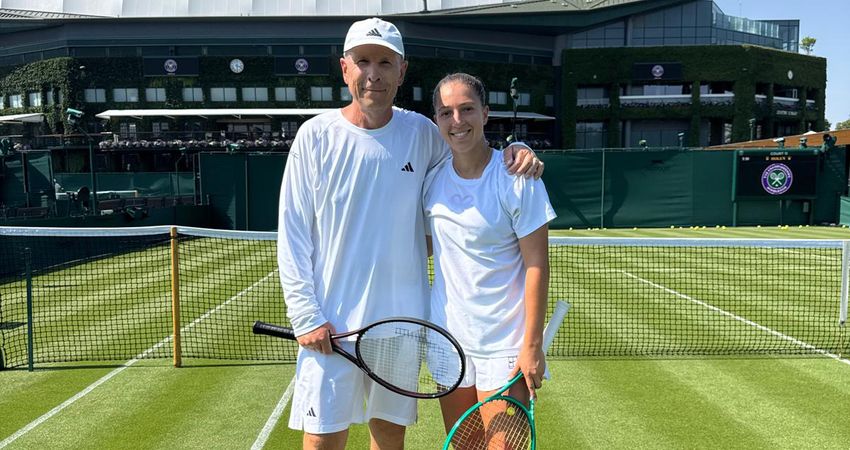
With more than three decades coaching on the professional tennis circuit, Thomas Hogstedt has become one of the most respected figures in the sport.
From his beginnings as one of Sweden's brightest junior prospects to guiding Grand Slam champions and World No. 1s, Hogstedt's career has spanned generations of the game and left an enduring mark on both the WTA Tour Driven by Mercedes-Benz and the ATP Tour.
Emerging during the golden era of Swedish tennis, Hogstedt announced himself by winning the 1981 US Open junior title before forging a successful professional career. He climbed to a career-high rank of No. 38 and recorded victories over some of Sweden's greatest champions, including Björn Borg, Mats Wilander and Stefan Edberg. However, it would ultimately be his coaching career that defined his legacy.
Following his retirement from competing in 1995, Hogstedt never left the game. Surrounded by the close-knit Swedish tennis culture and recognizing the evolution of the modern game, coaching became a natural progression.
"It came kind of natural," Hogstedt said. "The last years when I played, when my ranking dropped, I saw a new generation that was hitting bigger. I started seeing my time was kind of over, so then I went to coaching.
"I had a great coaching course from the ATP for former players. It came very natural, and I started a couple of years with juniors.. Then very quick, I came in with bigger players."
His first years in coaching reflected the same passion for developing Swedish tennis that had shaped his own career. While traveling with Magnus Norman during his breakthrough campaign at Roland Garros, where he defeated the World No. 1, Hogstedt assisted Norman's rise to a career-high No. 2 ranking.
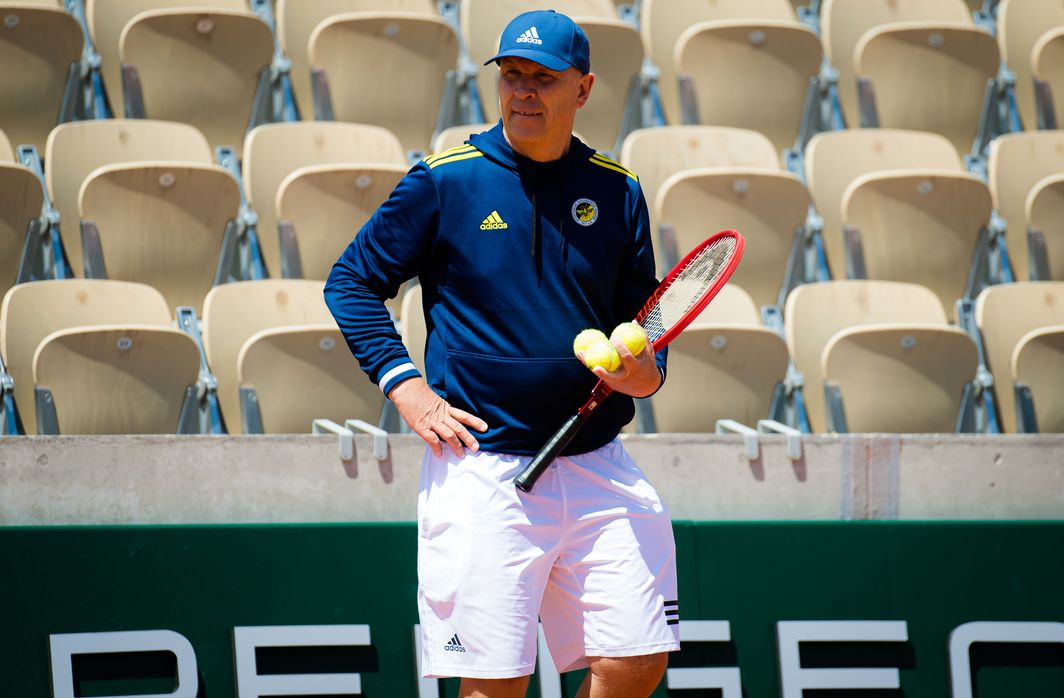
At the same time, Hogstedt was also mentoring the next generation of Swedish talent, including Joachim 'PimPim' Johansson.
"I was really a bit responsible for that, and on certain weeks I went with Magnus Norman in the beginning, and some junior tournaments with PimPim. That's a little bit how it started."
Hogstedt's willingness to develop junior players while coaching established professionals became a defining characteristic of his career. As Swedish tennis regressed following the generation of Robin Söderling and Johansson, Hogstedt's reputation grew internationally.
His work with former No. 4 Nicolas Kiefer and No. 2 Tommy Haas established him as one of the game's premier coaches, opening the door to an equally successful career on the WTA Tour. Over the following decades he would help shape the careers of Grand Slam champions Caroline Wozniacki, Li Na, Maria Sharapova and Madison Keys. He's also currently working with France's Diane Parry.
Hogstedt's coaching philosophy has never been built solely around technical ability. Instead, he's sought players prepared to embrace discipline, consistency and relentless improvement.
"I always like players who are ready to work hard," Hogstedt said. "The players I have had that character, on the women's tour -- Maria, Li Na and Caroline -- they are some of the hardest-working players ever in tennis, and the same with a lot of the guys I worked with.
"That mentality suits me well. It's not every player who wants to work that hard and you need to find the right balance for each player. I've made mistakes, but you learn and you try to find the right fit, and sometimes the player-coach relationship simply doesn't match."
Sharapova arguably embodied that mentality the best. Following shoulder surgery, Hogstedt transformed her into a Roland Garros champion and complete the career Grand Slam, built on a shared belief that success was earned through preparation and hard work.
Those standards extended beyond the practice court. Rather than allowing players to drift into comfortable routines, Hogstedt encouraged them to lead by example, often training before the courts became busy, and honed in on that elite performance is built through daily habits long before match day arrives.
"You have a choice," Hogstedt said. "You like to sleep in, but then you practice 11 a.m. to 12 p.m. or 12 p.m. to 1 p.m. and you'll be No. 4 on the court. Or you go up and you play 8 a.m. to 9:30 a.m., and you have the court by yourself.
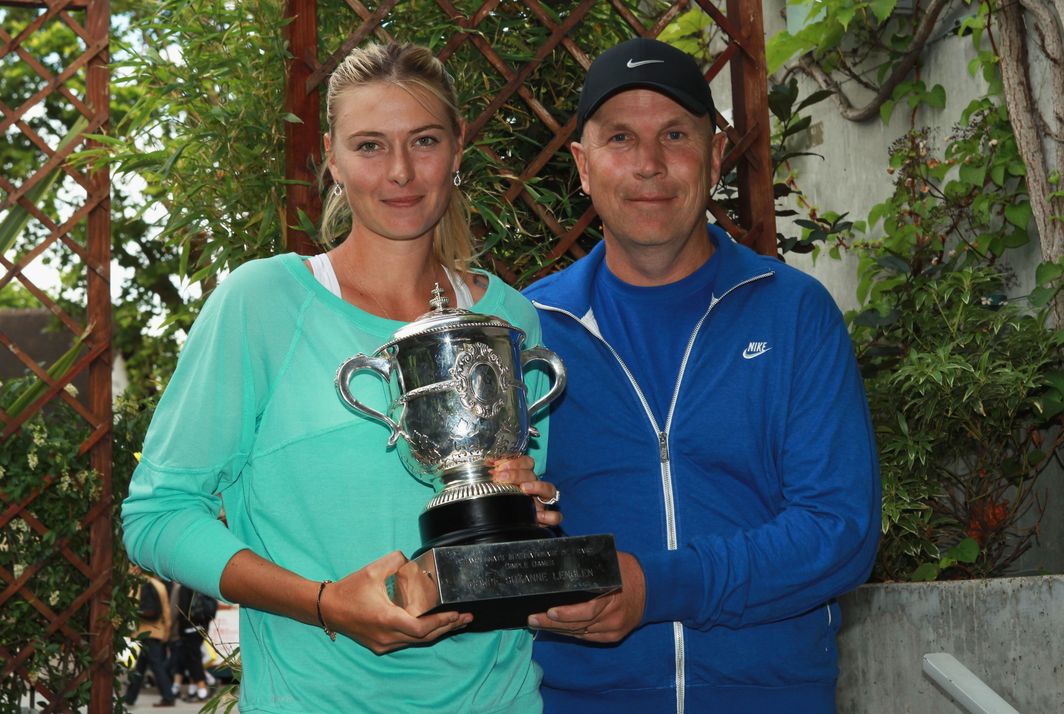
"That's where you see a lot of the players I worked with. They continued after we worked to play 8 a.m. to 10 a.m. because if you want to play on the stadiums -- even if you have to play very early or very late -- you have to do that."
Another hallmark of Hogstedt's coaching has been his ability to build collaborative environments where everyone works towards the same goal. For example, working alongside strong parental influences, including the fathers of Sharapova and Wozniacki, required communication, humility and trust.
"With both Maria and Caroline Wozniacki, I spent a lot of hours with their fathers discussing our goals and areas to improve. I think the key is always to have one voice to the player. Sometimes you have to take a step back and work with the team."
That team-first culture has remained central throughout his career. The respect his players showed him often reflected the environment he created, Hogstedt said, citing Jonas Bjorkman, who "took way more care of me than he took care of himself."
Sharapova also left a lasting impression, not simply because of her achievements, but because of her professionalism.
"Working with Maria was an unbelievable experience to learn how intelligent she is, how she managed sponsors even when she wasn't able to play. She made sure the tournaments were happy with all of her obligations, and also the way she took care of her team."
One of the reasons Hogstedt has remained relevant for so long is his willingness to keep evolving. Throughout much of his coaching career on both tours, he believed the exchange of ideas benefited everyone involved.
"I always liked to combine," Hogstedt said. "I worked a long time with Caroline when I was with Nicolas Kiefer, and then with Tommy Haas. Working with a WTA player and an ATP player worked well, and they learned from each other, especially at the big combined events like Madrid, Rome and the Grand Slams."
Even today, new challenges motivate him, and those new challenges are something needed to be on tour for this long, Hogstedt said. Working with Parry has reignited his enthusiasm, particular because of her unique play-style as a "one-hander" with "enormous touch," he said.
Preparation remains one of Hogstedt's greatest coaching strengths. Rather than relying purely on instinct, every practice session is designed around the demands of the next opponent, and Hogstedt will send his players videos of their next opponent to better prepare his players for the practice session leading up to the match. Training becomes purposeful and match-specific, allowing players to arrive on court with both confidence and a clear tactical plan.
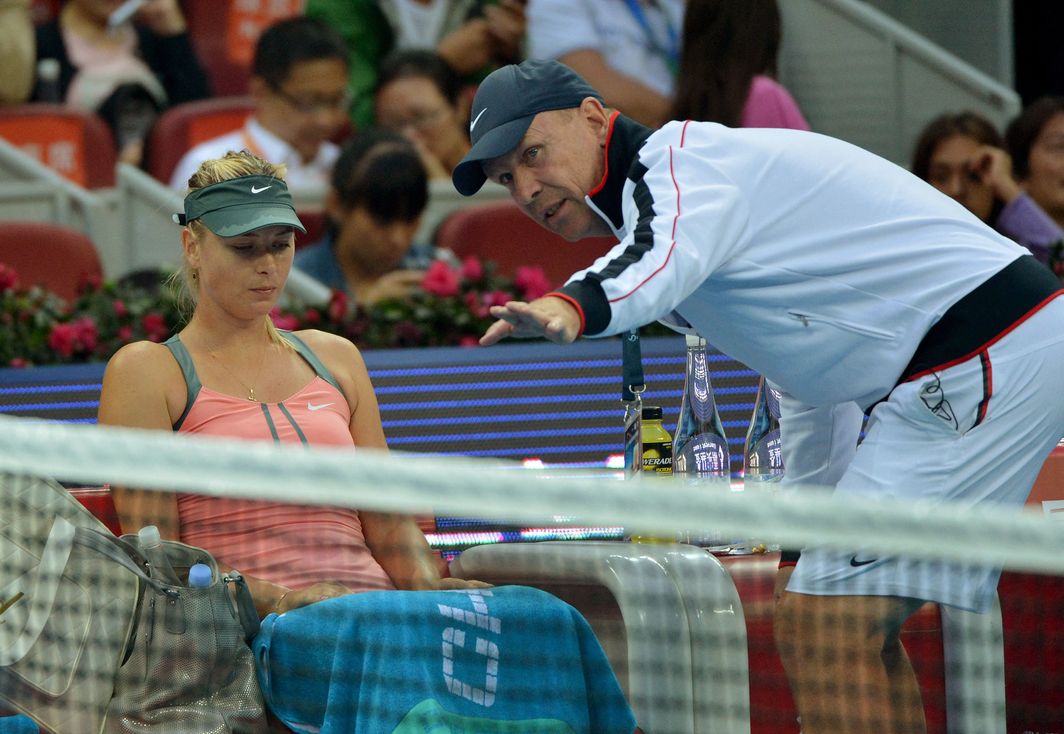
Having coached champions across multiple generations, Hogstedt believes the WTA Tour has never been stronger, he said. Hogstedt added that women's tennis is defined by depth, professionalism and exciting personalities, with today's stars continuing the legacy established by the champions who came before them.
While he believes legends such as Sharapova, Serena Williams and Steffi Graf would still compete at the highest level today, he is equally excited by players such as Coco Gauff, who have the ability to leave a lasting impact both on and off the court. Furthermore, he sees echoes of Sharapova's professionalism in today's World No. 1 Aryna Sabalenka.
"Sabalenka reminds me a lot of Maria," Hogstedt said. "I always thought we were the best team. We had all the small details. Now you see so many teams working so well, and I think Sabalenka has taken it to another level."
For Hogstedt, tennis is almost addictive. Once you've experienced the intensity of the tour, the pursuit of improvement and the challenge of helping players fulfill their potential, it's difficult to walk away.
"I've been doing much less the last years on the tour, but now I'm kind of eager again," Hogstedt said. "I don't think you get too old for it."
Perhaps that is why his greatest legacy is not measured solely by rankings or Grand Slam trophies. It lies in the culture he has built, one where coaches, players, fitness trainers, physios and families work together with one voice.
Those environments become more than teams -- they become families. That philosophy has carried Hogstedt across generations of champions and ensured his influence on world tennis will continue long after the final match point.