







WTA Americas Coach Inclusion Program immerses cohort with top teams at Charleston Open
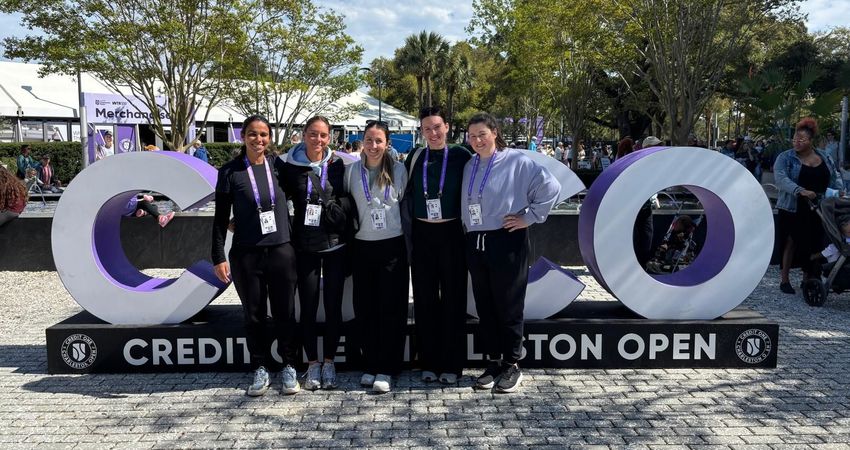
CHARLESTON, S.C. -- Five members of the 2025-26 cohort for the WTA’s Americas Coach Inclusion Program had the incredible opportunity to complete their on-site experience at the WTA Tour Driven by Mercedes-Benz 500 tournament of the year, the Charleston Open.
Madison Bourguignon, Noah Cohen, Maísa Feital, Anna Morgina and Rebeka Stolmar spent a few days in South Carolina’s Lowcountry shadowing top coaches, including Sascha Bajin (Diana Shnaider), Tom Gutteridge (Iva Jovic) and Kamau Murray (Sloane Stephens).
The group saw day-to-day operations of the coaching teams, and spoke with WTA physios, mental health professionals, fitness trainers and agents. They also met with WTA Legend Pam Shriver and Coach Inclusion Program graduate Fanni Varga, who went on to coach WTA player Danielle Collins and was with Yue Yuan’s team in Charleston.
The five are part of an overall class of 11 undertaking the Americas program, a joint venture between WTA Coach Program, the newly launched coaching arm of the USTA, USTA Coaching, along with WTA’s long-time coach-education partner Professional Tennis Registry. Charleston has been a staple location for the on-site portion of the program, graciously hosting cohorts each year since the Americas program’s inception in 2021.
In December, the group completed the opening workshop phase at the USTA headquarters in Lake Nona, Florida, with the material ranging from framing, observation and application paired with exposure to players, coaches and agents. The remaining members of the cohort will complete on-site shadowing at future tournaments in Washington D.C., Toronto and São Paulo. The Americas program had so much demand that an additional four are enjoying the workshop and webinar portions, a testament to the program’s rapid growth in the Americas and globally.
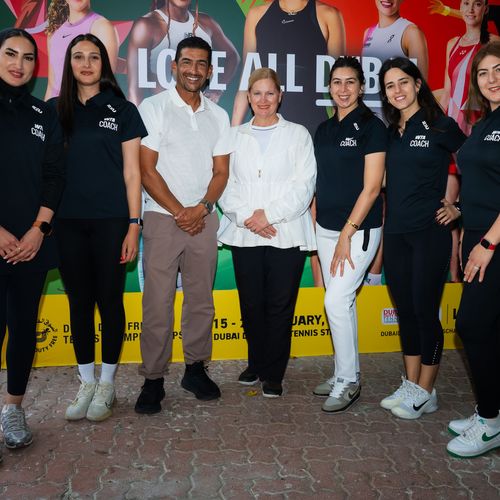
The WTA Coach Inclusion Program has offerings through the United Kingdom’s Lawn Tennis Association, the Fédération Française de Tennis and Tennis Australia. Furthermore, the WTA celebrated the first graduates of the Middle East Coach Inclusion Program at the Dubai Tennis Championships in February.
Get to know each of the five and read of their spectacular experiences in Charleston:
Madison Bourguignon
Originally from the United States, Bourguignon recently moved from South Florida back to her hometown Seattle, Washington. She works at a tennis club, working primarily with juniors, and she shadowed Bajin alongside Cohen in Charleston.
Her most valuable experience was connecting with the rest of her cohort and learning of their experiences as incorporating a variety of backgrounds is a goal of the Coach Inclusion Program.
“The most valuable thing from this week has been connecting one with other women that are here, part of the program,” Bourguignon said. “Everybody's grown up in different cultures as well, so I think that's been really interesting.”
The cohort shared with one another their on-site experiences and how it relates to their individual backgrounds. Bourguignon said they met with USTA Coaching and WTA’s Player Relations team to recap their experiences, where she saw first-hand how agents, coaching teams and physios play a dynamic role in a successful tournament for players.
“Seeing how it operates in a tournament, where there's so many different aspects, has been really valuable,” Bourguignon said. “A lot of us coach junior tennis, and we don’t have aspects like agents, media and all this. Seeing the different parts actually as they're active and happening, has been really cool and interesting.”
Noa Cohen
Originally from the south of France, Cohen discovered the Coach Inclusion Program through a recommendation from her boss at IMG Academy in Bradenton, Florida, where Cohen now works as a coach. She primarily works with juniors.
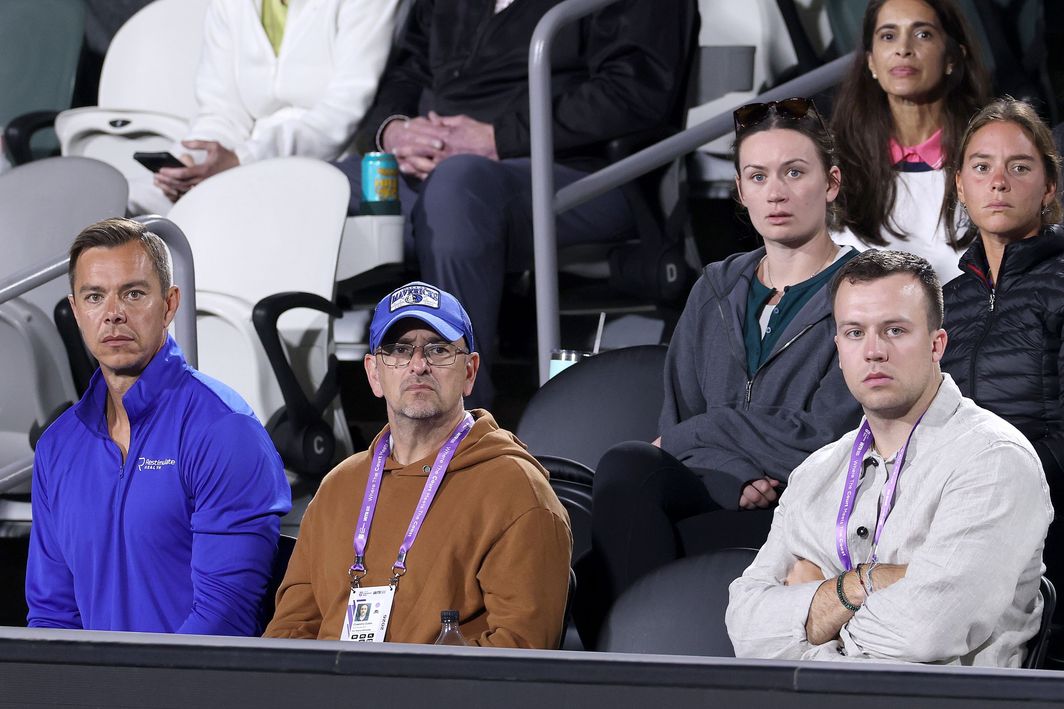
Shadowing Bajin, her largest takeaway from the experience is how attentive Bajin is for Shnaider, and how important that dynamic is when coaching.
“The thing that it stands out the most to me is that he lives completely for her,” Cohen said. “There’s different type of coaches also, but from the first moment he wakes up in the morning and when he goes to sleep at night, I think she is the one thing in his mind.
“The partnership, having someone with you there every single second of the day really is what counts the most for the players.”
Through the classroom lessons and exposure to mental health professionals and sports psychologists, Cohen better understood that tennis is very much mental, and that will be a key teaching point back at IMG Academy.
“I think most of it is based on the whole mental preparation parts, and we realize that at this level, pro level, maybe 20% is actual tennis. We're here in Charleston now and honestly, I think it's been really great to see in action what actually happens.”
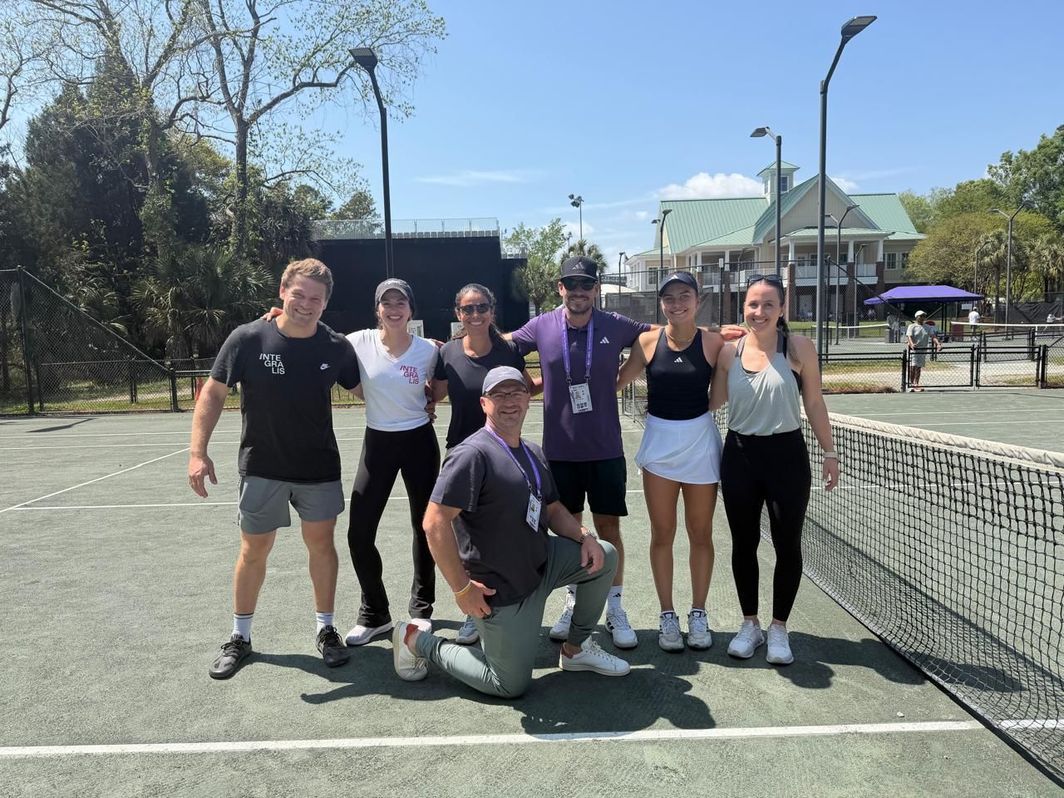
Maísa Feital
Feital owns her tennis academy in her native Brazil, working with players of all ages, but focusing on those in their teenage years. The in-class and webinar experiences helped her understand the larger-scale operations of the USTA and WTA.
“We usually don't have many women coaches in Brazil or South America either,” Feital said. “It was nice to see many coaches of different experiences, different levels, both teaching and when they used to play.
“To get to know how the USTA works, how the WTA works, so many good procedures, infrastructure and everything is always nice to figure out that macro-thing around tennis and try to bring back some of that back to Brazil in a way that it's practical for us. We might be able to start smaller, but (turn) into something really, really incredible there.”
Feital was assigned to Gutteridge, a perfect fit as Gutteridge is working with one the tour’s top teenage players. Jovic, the World No. 16 who reached the semifinals in Charleston, is 18 years old and is a relatable player for many at Feital’s academy.
Watching Jovic and Gutteridge’s training regimens in Charleston gave Feital the confidence that some of the strategies she’s learned during the workshops will work at her academy.
“Her age is so close to the people that I work with, and I guess Tom does mainly work with that part of development as well from for 14 years old,” Feital said. “For me, it was perfect. They group was very open, and there is clearly a very high level of people working with her.
“It’s pretty amazing to go back home with the reassurance that we can practice more, we can have training blocks during competition and just realizing they’re still so young, so the results now are not the end goal, so it's pretty good to have that reassurance.”
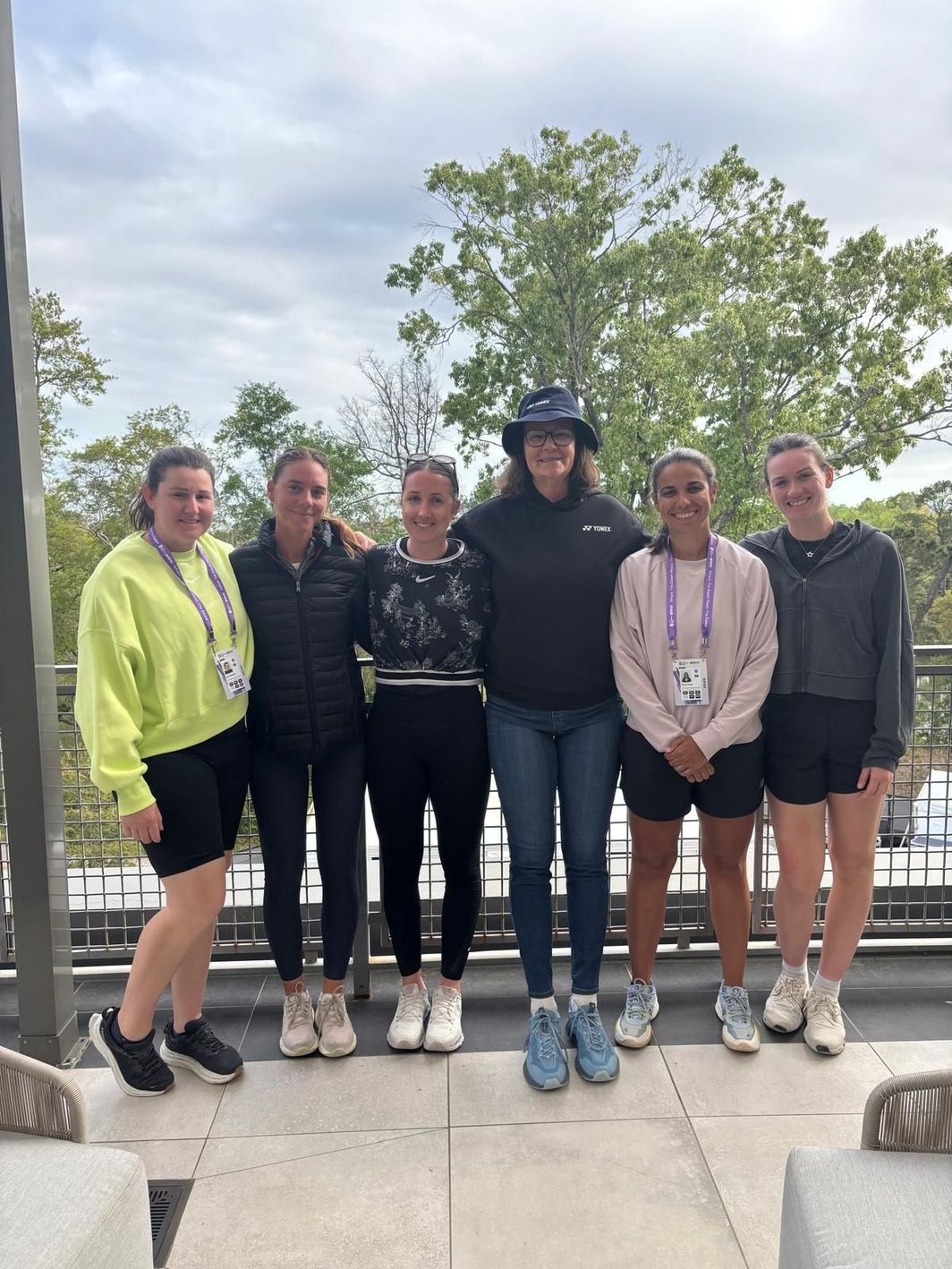
Anna Morgina
A former player on the WTA Tour, Morgina heard of the Coach Inclusion Program through one of her colleagues, Nazari Urbina, who completed the program last year. From Russia originally, Morgina spent her teenage years in Egypt, and currently resides in New Jersey where she works at a tennis academy.
Having experience competing both collegiately at the University of South Carolina and on the pro circuit, Morgina knows there’s room for improvement as a coach, and that was her motivation to apply for the program. In Charleston, she paid close attention to Murray and how he coached Stephens, finding a few tidbits that she will apply back to her players in New Jersey.
“In my perspective, a coach that thinks that he knows everything is not a good coach. There is always room to improve, and I'm always learning something new,” Morgina said. “There are a few things I picked up, what he was telling her. I'm going to use it as my coaching expertise. I feel like I'm getting better every day I'm here as a coach.”
Morgina said she also noticed how the coaches pay close attention to the specific intricacies of their player, and how a coach can identify things that a player can’t, a maturity that Morgina wished she possessed while playing.
“As a player, I never noticed people's grips or some stuff only a coach would,” Morgina said. “As a coach, I'm watching, I'm like ‘There's so many other things.’ I wish I was more matured when I played. I would’ve done so much better.”
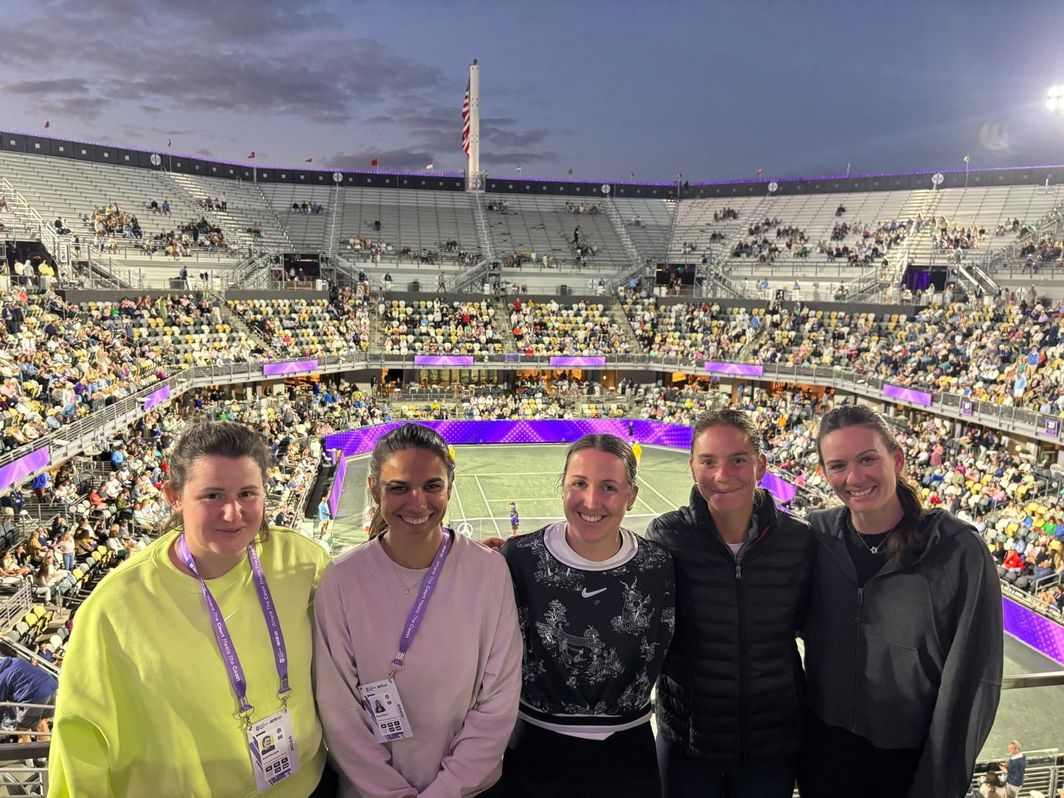
Rebeka Stolmar
For Stolmar, who is from Hungary but currently works in Seattle, she echoed the importance of meeting professionals in the various industries in the tennis landscape and emphasized how all those areas intersect.
“It was just really interesting to see what their job is and how it ties in with coaching and helping a professional on tour and what you can do as a coach to help your player the best,” Stolmar said. “Not just technically, but everything that goes into it.”
She especially noticed how a coach should understand their player’s personality. Assigned to Murray, Stolmar watched how Murray used a “gentle” approach to coaching Stephens this week.
Given she’s still getting into form after a recent injury, the goal wasn’t all results-based for Stephens, but rather just finding a consistent flow. It was a more independent approach but made sense with the circumstances. Essentially, Stolmar took note of how having situational awareness and understanding player personality is important and a benefit to a cohesive team.
“Based on these experiences, I got to see how everybody is very different and saw some examples how you can talk to a player like Sloane versus how you can talk to a player who is very young,” Stolmar said. “It’s been a hugely valuable experience!”