







On a morning shaped by fear, Marta Kostyuk still found a way forward
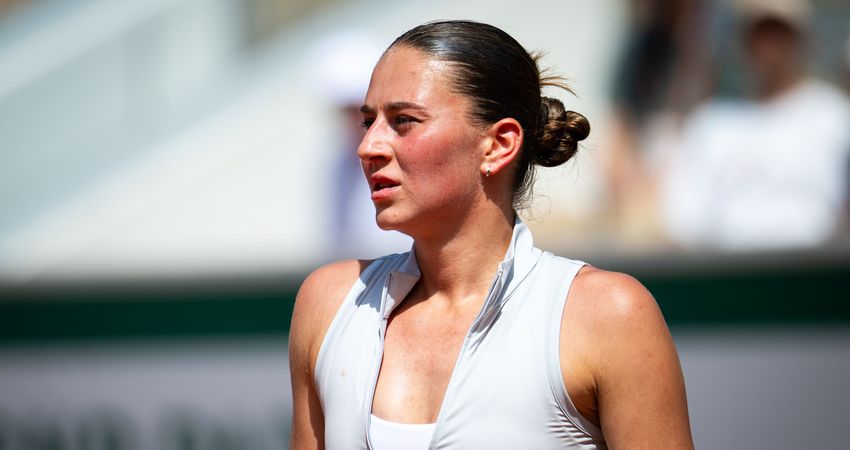
PARIS -- Marta Kostyuk arrived at Roland Garros on Sunday carrying something far heavier than the pressure of a Grand Slam opener. A few hours earlier, she had learned a missile strike in Kyiv hit just 100 meters from her parents’ home. Her mother, sister and grandmother’s sister were there.
Somehow, she still had to play tennis.
By the time her first-round match against Oksana Selekhmeteva began, Kostyuk was still trying to process the reality that her family’s lives could have changed forever.
“Right now, I think it was just the closest that it has ever been to my house, and this what probably makes it the most emotional,” Kostyuk, the 15th seed, said in press afterward. “There are obviously better days, worse days, but yeah, this one was, I would say, top three worst ones.”
The 1-hour, 18-minute match itself -- a steady 6-2, 6-3 victory -- felt secondary. What lingered afterward was the vulnerability in her voice as she spoke about trying to play tennis while wondering how close she had come to losing her family.
“There were times in the match when I would go back to thinking about it,” she said in press. “Because most of the morning I felt sick just from the thought that if it was 100 meters closer, I probably wouldn’t have a mom and a sister today.”
The early 11 a.m. start may have helped in at least one sense: There was little time to sit with the news before walking onto court.
It came as little surprise that the usual anxieties surrounding a major suddenly felt smaller. Normally, first rounds come loaded with nerves -- concerns about movement, timing, rhythm and, for Kostyuk now, expectations. But Sunday unfolded under circumstances that made tennis difficult to separate from real life.
Kostyuk said her family spent Sunday trying to recover and simply be together after another sleepless night in Kyiv.
“They feel OK,” she said. “Obviously very scary, but, you know, it’s not the first very difficult night, not the last, so, you know, they are adapting.”
For years, Kostyuk has wrestled with the balance between emotion and performance. She has spoken openly about how easily frustration, anxiety or outside stress could spill into her matches. But the war, and the constant emotional toll that comes with it, has forced her to navigate pressures that extend beyond tennis.
It is an unfair reality for any athlete to carry. Never mind trying to perform on one of the sport’s biggest stages while carrying the fear and helplessness that come with watching your home country endure war from afar.
At the same time, this stretch has also produced the best clay-court tennis of her career. Her opening-round win pushed her winning streak on clay to 12 matches following her title run in Madrid. Even as her form continues to rise, Ukraine remains at the center of her emotional reality.
"It's definitely exhausting,” she said, "especially when it repeatedly is happening over the night, nobody is sleeping well. People are just more irritated and scared. But generally, everyone is really angry."
Kostyuk acknowledged that global attention around the war has faded compared to the opening months after the invasion began. But for her, there is no distance from it.
Her family lives with it every day.
And on Sunday morning in Paris, it followed her onto the court.