






Qualifier Chwalinska sets Roland Garros quarterfinal against Kalinskaya
The only Polish player left in the Roland Garros quarterfinals isn't who you might expect.
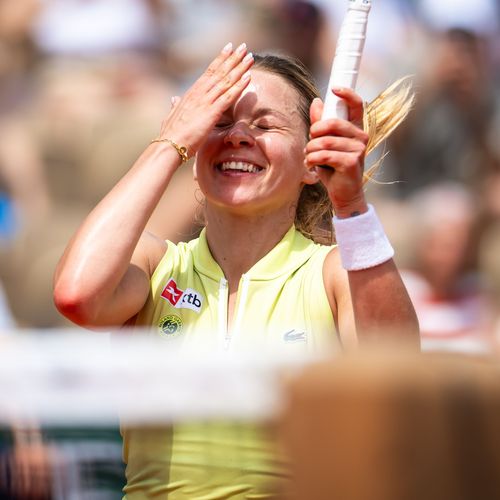
It's not four-time champion Iga Swiatek, who fell to Marta Kostyuk in the fourth round on Sunday. It's qualifier Maja Chwalinska, Swiatek's former junior doubles partner, in her very first Roland Garros main-draw appearance. The 24-year-old claimed her seventh straight win in Paris by ending the hopes of the last remaining Frenchwoman in the draw, Diane Parry, 6-3, 6-2. She has conceded just one set so far, against Maria Sakkari in the third round.
Chwalinska becomes the first qualifier to reach the Roland Garros last eight since Nadia Podoroska and Martina Trevisan in 2020, and just the fourth Polish Grand Slam quarterfinalist in the Open Era following Agnieszka Radwanska, Swiatek and Magda Linette. She'll next face No. 28 seed Anna Kalinskaya as she bids to follow that trio into a major semifinal.
Chwalinska is competing in just her third Grand Slam main draw -- she also qualified for Wimbledon 2022, reaching the second round, and the Australian Open 2025 -- and only her eighth WTA main draw in total. Before this week, her career tour-level record was just 6-7; Chwalinska's success has mostly come at WTA 125 level (where she is a three-time champion) and on the ITF circuit.
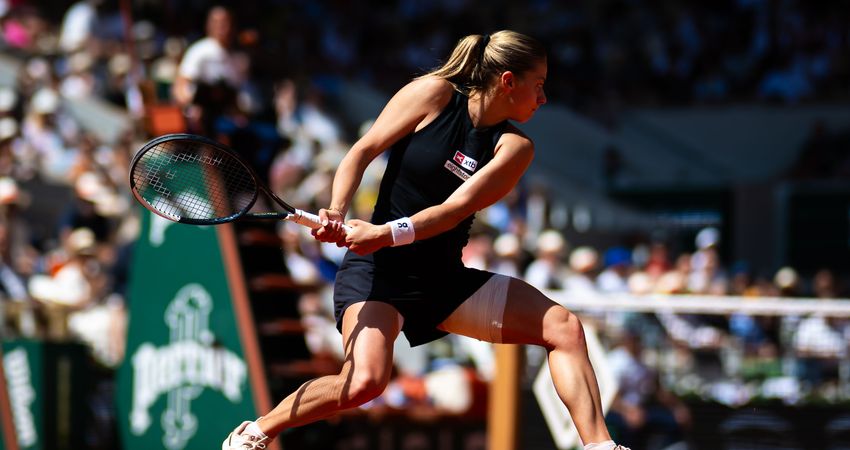
But over the years, Chwalinska -- whose career has been paused several times due to depression and to various injuries -- has become a tennis hipster favorite due to her finesse and the array of hot shots she can produce. They finally got their big-stage moment on Monday: a half-volleyed lob on the run, a passing shot at full stretch that slid down the line, angled winners from nowhere. And, of course, drop shot after drop shot, followed up with silky lobs or gentle passes if they weren't outright winners already.

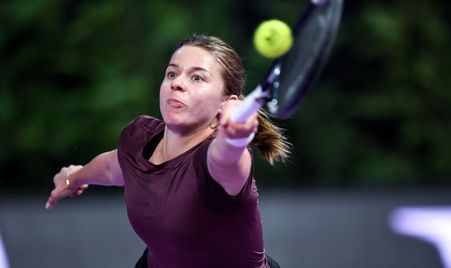
Despite Chwalinska's inexperience at this level, she also stayed calm as she neared the biggest win of her career. She faced just one break point, in the fourth game of the second set. She saved it with an unreturned serve, and did not drop another game. As she served out the match, yet another exquisite drop shot indicated that if there were nerves, they hadn't affected her touch.
Parry, who was also making her Grand Slam fourth-round debut, started the match with a solid strategy: to dominate with her forehand, and take advantage of Chwalinska's defensive court position by finishing points at net. But the World No. 92's forehand let her down in the most important moments: consecutive errors over the baseline to drop serve for 5-3 in the first set, and repeatedly in the home stretch of the match.
Chwalinska first cracked the Top 200 back in 2019, but over the years her momentum towards the Top 100 was repeatedly stalled by her struggles with her mental and physical health. That will change after Roland Garros -- she is certain to debut in the Top 100, and could even guarantee herself a Top 50 spot with another win -- and there have been signs already this year. Chwalinska reached reached her first tour-level quarterfinal in Cluj-Napoca this February -- Roland Garros is her second -- and her third WTA 125 title in Oeiras in April, pushing her up to a career high of No. 113. (She's ranked No. 114 this week.)
"I started working with a new fitness coach last year," Chwalinska explained. "I knew that I need time to get used to the new training. But I felt like I'm improving a lot. It just allowed me to be much more aggressive on the court. Also [to] keep the intensity more than before.
"I had a few tournaments this year that I felt like my level is improving, for sure. There were some moments, for sure. I didn't expect to be in quarterfinals, but I felt like I'm going in the right direction."
Now that Chwalinska is on an upwards trajectory, she doesn't intend on stopping.
"It was my goal for this season to be Top 100," she said. "I'm very happy that I already reached it. But I feel like in tennis you're always hungry, you know. You set one goal, but then you reach it and you want more. Very grateful for this moment, but I definitely want more."
Kalinskaya triumphs over Potapova in 2-hour, 49-minute rollercoaster to reach second major quarterfinal
As Kalinskaya began to address the Court Suzanne-Lenglen crowd in her post-match interview, she was still in a state of disbelief.
Not because she'd made her second career Grand Slam quarterfinal -- and first at Roland Garros, having previously won just one main-draw match here -- after edging No. 28 seed Anastasia Potapova 6-4, 2-6, 7-6[7], but because the 2-hour, 49-minute rollercoaster had finally ended.
"I'm shocked," the No. 22 seed said. "I can't believe the match is over."
She wasn't the only one. Kalinskaya, who previously made the last eight of the 2024 Australian Open, came from 4-1 down to win the first set, and overturned a 4-1 deficit in the super-tiebreak. Potapova, who dethroned defending champion Coco Gauff in the previosu round, had also levelled the third set after trailing 4-1, but was unable to serve the match out twice at 5-4 and 6-5.
Kalinskaya advances to just the fifth clay-court quarterfinal of her career, and second on red clay following Strasbourg 2025. She improves to 3-0 overall against Potapova, and will face either home hope Diane Parry or qualifier Maja Chwalinska as she bids to reach her first Grand Slam semifinal.
"A really long fight from both of us 'til the last seconds," Kalinskaya said. "I've played her many times, but this one was definitely special. She improved a lot, so today was super challenging."
"I was a little bit like, whatever"
Over the course of a nervy, gruelling affair decided more by unforced errors (Kalinskaya committed 58 and Potapova 49) than winners (32 each), both players could have been forgiven for feeling slightly over it in some of its tougher patches.
It turns out that was the key for Kalinskaya.
"I don't have any nerves any more whatsoever," she said when asked about Potapova serving for the match twice. "I was hoping to stay focused, and things didn't work. So I was a little bit like, whatever.
"So I could relax a little bit and get the rhythm, focus on my breathing and try to break her. I'm super happy I could do it."
In her press conference, Kalinskaya clarified that those moments of nervelessness had been brief.
"No, I was definitely nervous," she said. "I meant some moments when after losing my serve at 5-5 in the third set, being 40-0 up and then I lost this game. I was kind of frustrated, because I really wanted to win that game and to be up in the score and have a little bit of advantage to finish the match.
"When it didn't work, I was upset. But it was a very fast changeover, so I had to reset and continue to play. Definitely I was nervous probably until the last point."
But that "whatever" attitude has also been important in how she's approached the clay-court swing this year -- a surface Kalinskaya hasn't enjoyed much previous success on.
I think I just take this clay season very easy mentally," she said. "Like, I don't put too much pressure to do well. I guess it helps. Of course, I practice all the same, and every year I feel more comfortable on clay with the experience, but I didn't have any expectations on clay for myself."
Throughout the match, Potapova -- who was bidding to become the first Austrian quarterfinalist at Roland Garros since Barbara Schwartz and Sylvia Plischke in 1999 -- consistently lapsed into error when in front. In the first set, she captured a double-break lead with a superb forehand winner down the line, only for that wing to immediately go awry as she conceded five straight games. In the final game, Potapova sent forehands long and into the net, before shanking a backhand to go down set point -- lost with a netted backhand.
In the final set, consecutive double faults put Potapova down 3-1, before she roared back with some of her best tennis of the day. But the errors off both wings recurred again as she failed to serve out the win at 5-4.
Though Kalinskaya was beset by errors as well, the 27-year-old was also able to raise her game when opportunities presented themselves. She ended a key eight-deuce tussle to hold for 2-1 in the decider with a forehand winner, and forced a tiebreak with another. The second half of the tiebreak also saw Kalinskaya seize control with aggressive tennis, boldly taking the ball out of the air for drive volley winners as she took nine of the last 12 points.
It's not the first time Kalinskaya has won a wild marathon encounter in this year's clay-court swing. In the Rome second round, she fended off a remarkable nine match points to defeat Katerina Siniakova 4-6, 7-6(4), 7-5 -- the most any player has saved en route to a tour-level victory in 2026 so far.