







Daria Snigur is in career-best form. Her biggest dream? To live in Kyiv again
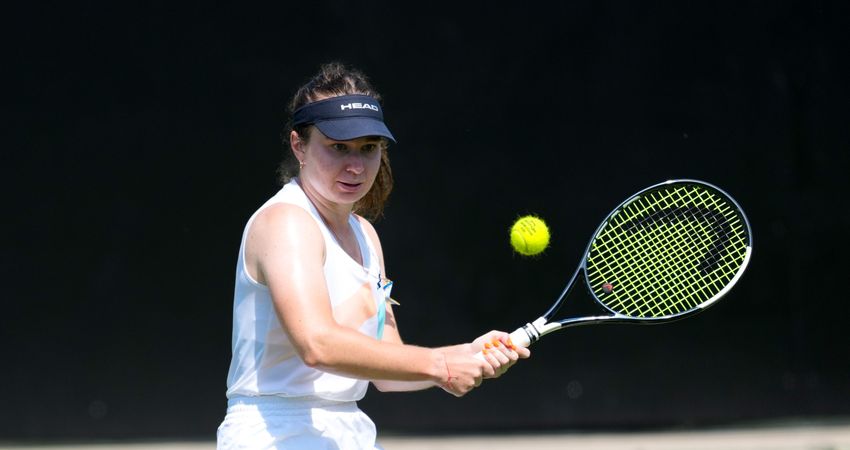
Note: This interview was published ahead of Wimbledon 2026. On Tuesday, Daria Snigur upset Elina Svitolina 7-5, 6-2 in 68 minutes, coming from 4-0 down in the first set to reach the second round for a second time. Snigur improved her record against Top 10 opposition to 3-1 (2-0 at Grand Slams).
LONDON -- Daria Snigur has arrived at Wimbledon, her "favorite place in the world," in career-best form. But the Ukrainian isn't dreaming of winning the tournament, or even her first round against compatriot Elina Svitolina, the No. 8 seed.
She's thinking about her home city, Kyiv, and her flat by one of the Ukrainian capital's many picturesque lakes. She hasn't lived in it for over four years: in 2022, following the Russian invasion of her country and the destruction of Snigur's training base in a missile attack, she moved to Warsaw, Poland, where she has lived since.
"The biggest dream for now is to live in Kyiv again," she said. "It's a beautiful city for me."
Even the 24-year-old's fondest memories are framed by the war now. The 2019 junior Wimbledon champion, she still feels pride when she sees her name engraved on the honours board in the AELTC. It's not just important for her any more, though.
"This is one of the beautiful moments in my life, in my career," Snigur -- who still plays with a Ukrainian ribbon pinned to her outfit -- said. "Because I hope it helps our Ukrainian children, because it's tough to play tennis now."
Despite that, Snigur has nonetheless managed to carve out a breakthrough season in 2026. She first made a major impact on tennis in 2022, when she upset then-World No. 7 Simona Halep 6-2, 0-6, 6-4 in the first round of the US Open. She got as high as No. 105 in November that year, but spent most of the next three seasons floating around just beneath the main tour. Her ranking never fell beneath No. 201, but a Top 100 breakthrough was elusive.
The talent was there, and the faster the court, the more likely Snigur was to show it. The evidence? Her unlikely winning records against both the Top 10 (2-1) and Top 20 (4-3), thanks to defeats of Beatriz Haddad Maia at Nottingham 2023 and Marta Kostyuk at Nottingham 2024. Snigur's game -- and forehand motion -- is unusual but devastating when it's working, with flat forehand winners slapped into the corners out of nowhere and double-handed drop shots breaking up the rhythm.
The self-belief wasn't there, though -- until last year, when Snigur began working with Dawid Celt, the former coach of another sui generis talent, Agnieszka Radwanska.


"He changed my head," Snigur said, pointing at it to underline her point. "This is the first thing he changed. This is, in my opinion, the most important in our sport. He changed my mental health, because he's a good psychologist. He gave me a lot of confidence, I think, because sometimes he believes in me more than I believe in myself. And this is one of the reasons why he's my coach."
Celt took away Snigur's self-imposed pressure to make the Top 100. Instead, her aim when she steps on to court now is simply "to show my good game" -- the hyper-aggressive shot-making that she enjoys. It's led right back to her first goal. In February, she reached her first tour-level semifinal in Cluj-Napoca, then captured her first WTA 125 title in Oeiras. In March, she cracked the Top 100. Boasting a 34-11 record this year -- and an even more impressive 50-18 since last year's US Open -- Snigur has risen to No. 77 this week.
Snigur still prefers her courts to be as quick as possible -- grass is her favorite surface -- but the best demonstration of her mental breakthrough came, unexpectedly, during this year's clay-court season. In Madrid, playing the first tour-level clay-court match of her career, she defeated former Roland Garros semifinalist Daria Kasatkina 6-3, 3-6, 7-6(13), saving four match points to win the sixth-longest regular (first-to-seven) third-set tiebreak of the century so far. At Roland Garros, she notched another Top 20 win, coming from a set and 5-3 down to upset Clara Tauson 3-6, 7-5, 6-2.
Snigur laughs when reminded of those matches.
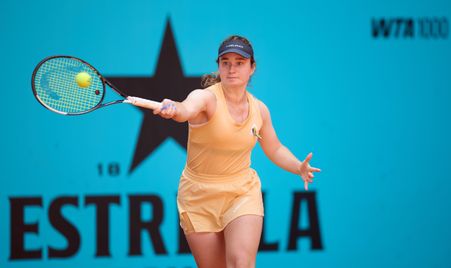
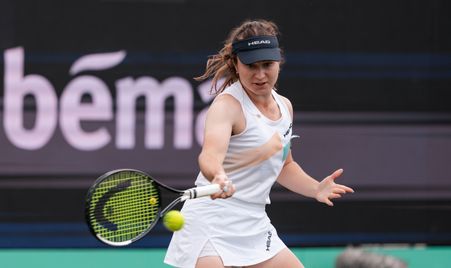
"So first, what you should understand is -- I hate clay," she said emphatically. "I don't like to play on clay. If I want to win a match on clay, I need to play more than two hours. I don't like it. This was already the best clay season in my life when I won more than one match. Honestly, I played the bigger tournaments -- Madrid, Rome, Roland Garros -- because [my ranking was too high] for small tournaments."
Celt persuaded Snigur to embrace clay, saying that she could still show her "good game" even on the hated dirt.
"This is what I tell you, Dawid gave me confidence," Snigur said. "He changed my mind. He told me, 'OK, you should play on clay every year. I understand you don't like it, but you should try to show what you can do.' And this year, it helps me."
Snigur may have come round to clay ever so slightly, but she's still relieved to have grass underfoot again this month. She was a quarterfinalist in 's-Hertogenbosch three weeks ago, defeating Paula Badosa en route, and now she has the opportunity to extend that winning record against Top 10 opposition even further against Svitolina. And Celt's maxim of focusing on showing off her best game will come in handy once again -- after all, it's how Snigur feels she's pulled off all those upsets in the past.
"I don't have pressure against top players," she said. "I just want to show my best game and enjoy the moment because it's always good courts, amazing stadiums and a lot of fans."