







Tatjana Maria has one eye on Wimbledon -- and one on the next generation
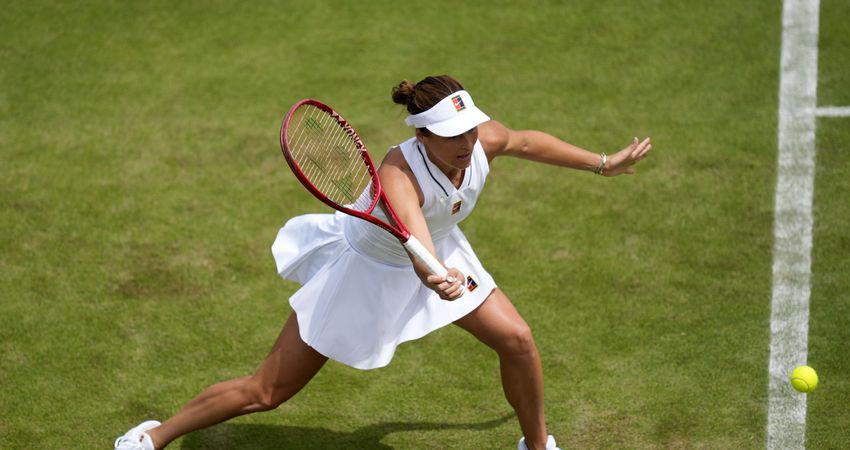
LONDON -- Tatjana Maria is especially looking forward to her next match at Wimbledon.
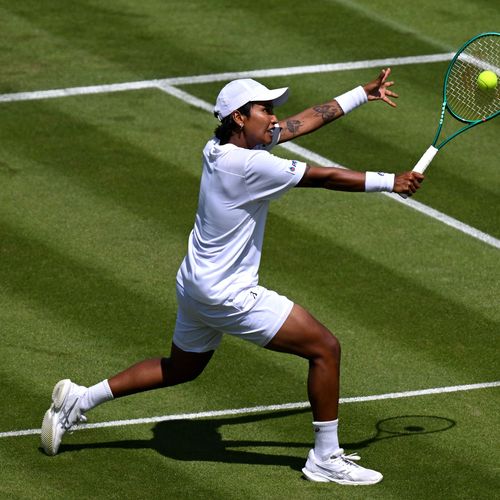
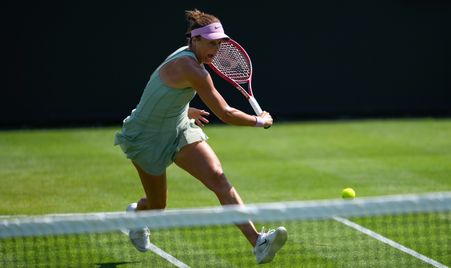
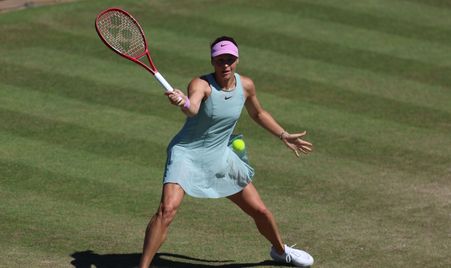
At 38, Maria is the second-oldest player in this year's main draw. On Monday, she defeated Yulia Putintseva 6-4, 6-4 to set up a second-round meeting with 18-year-old No. 16 seed Iva Jovic, the tournament's fifth-youngest player. Jovic is closer in age to Maria's 12-year-old daughter Charlotte -- an aspiring tennis player herself -- than she is to Tatjana.
"I'm happy to play her, because I like to play the young ones," Maria said.
It's not because Maria thinks younger players are more susceptible to her old-school, slice-heavy game. Rather, it's a chance to get an early look at the players who could one day be competing against Charlotte.
"Especially for my daughter, I like to see how they play," she said. "If she plays me, at some point she will maybe play Charlotte."
But in the meantime, Maria's own career continues to thrive -- particularly on grass. She reached the Wimbledon semifinals in 2022, won titles in Mallorca in 2018 and at Queen's in 2025, and finished runner-up in Eastbourne last week.
"This surface, I don't even need a preparation," she said. "I go on it and I feel well. My slices, they stay low. I like to run, I like to come to the net, I like to serve well."
Tennis fans are familiar with the idiosyncrasies of Maria's game, but watching her carve up opponents with slices, spins and changes of pace is only part of the story. How did she develop such an unconventional style, and in an era defined by greater power and athleticism, how has she continued to make it work?
Your shot selection, especially on grass, always seems to tie opponents up in knots -- a lob when they come to net, a drop shot if they stay back. How much of your game is about pre-planned tactics versus instinct?
I'm lucky because it's my game -- I mean, I don't have to change my game only for the grass. It's automatic that this is my game style, and it's tricky for everybody to play me because it's a different game style. They are not used to it.
My husband [and coach, Charles-Edouard], he looks at the matches and we have a tactic what we have to do. It's always important to know when one side is weaker or somebody doesn't like to come to net. But in general, it's a lot of instinct.
Some of your best shots seem like the kind of strokes you can't teach. How much do you practice them?
It's funny because when you see me practising, I practise like every other player and I play like every other player. I play normal forehands, normal backhands. So you see some slices, but not like what you see on my matches. That's the funny part, actually. Now, I start to practise a little bit more the slice in my game. But before, I practised a completely different way than what I was playing on the match -- players didn't want to practise with me, so I played normal in practise.
Did any early coaches ever try to tell you not to play all these slices, to play normally?
For sure. I had a lot of coaches who said at the beginning, 'You have to hit the ball, you have to do this.' But my husband, he did a great job coaching me and believing in my game style. And of course, we are improving. We try to improve all the time my game. It's not like it's done and I just want to stick around. But it's important that I accept that I have a game like this, and I love it.
One underrated aspect of your game is your fitness -- it requires so much running and so much stamina, and you also play a heavy schedule. Yet you never seem to get injured seriously. What's your training regimen like?
For sure, I have to be fit because I know I need my fitness for my game style. This means a lot of running on the court. I do a lot of training on the court, not a lot in the gym. I'm not doing weights because I have to be fast and ready. I prefer to train on the court and with my tennis racquet in the hand. This is the most important for me.I have to say I'm lucky with my body also that I'm not really injured, or not often injured. And we are traveling with Charlotte's fitness coach -- he's an osteopath at the same time, and he's my physio. I get a treatment every single day.
What did you think of Maja Chwalinska's run at Roland Garros? Her game isn't identical to yours, but she also relies on slices and touch rather than power.
I think tennis will change again. Before, maybe the players were playing a little bit more like me. After, it started to be really the hitting and power style. But I think now it will come back that players are able to play also some slice, to come to the net, to do the variation a little bit more. I think this style will come back at one point. Maybe that's why she was in the final.
We've all seen how you take apart big hitters on grass. But Monday, you faced Putintseva, who's also a tactical player with a lot of finesse. How did that challenge differ?
Yes, this was the difficult part today because we played a little bit similar. Yulia, she's also a tricky player. So it was really who does it better, who stays more patient, who goes to the net in the better spot. So it was a little bit tricky, and at the beginning it was tough for me because I had the feeling it was kind of slow, so I really had to put my body into it.
And I didn't serve really well at the beginning, so I was happy that my serve came back because it's a huge part of my game. If I serve well, I'm more relaxed in general.
Your daughter Charlotte wants to be a tennis pro one day. What's her game style -- like her mum's or not?
She's not playing my style, but she knows to do everything. She can slice. She can play volleys. She loves to go to the net. She loves also doubles. So I think she's an all-rounder.
She hits the ball really hard too. But I think it's important if you hit the ball hard that you know the other things too. I think then it's pretty hard for an opponent to beat her. So we try to make her good in everything.