




The long, methodical road that carried Elena Rybakina to No. 1
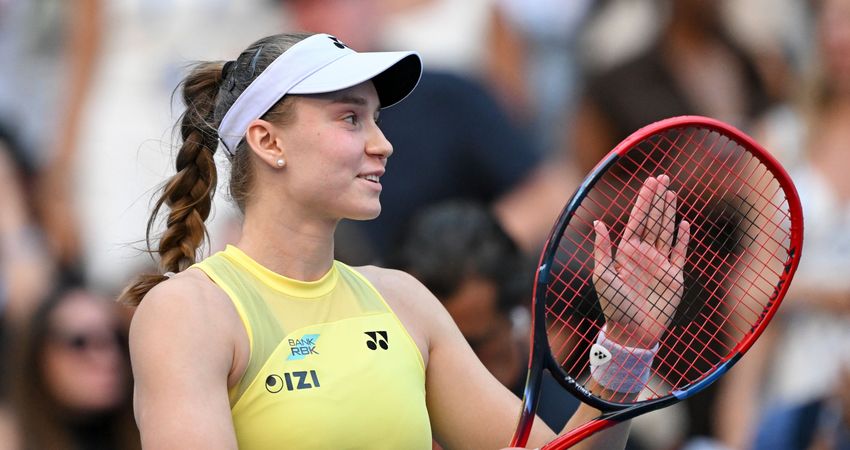
NEW YORK -- A little more than a week ago, while the US Open field was going through its final rounds of practice, Elena Rybakina was trying to find out whether her injured left ankle would let her play.
With the tournament imminent and the No. 1 ranking within reach, she and her team used those first few practices to see how it would respond -- whether it could withstand a Grand Slam, and, if it could, how much of the draw she might be able to navigate.
“It was not ideal, and I was stressed, of course,” Rybakina said of her arrival in New York. “The first days when I came onsite, when we had to test the foot and everything, so it wasn’t easy.”
Her team believed she could make it through.

The opening rounds gave her a chance to find out. Four matches later, Rybakina had not dropped a set and had been pushed to a tiebreak only once, against Yuliia Starodubtseva in the third round.
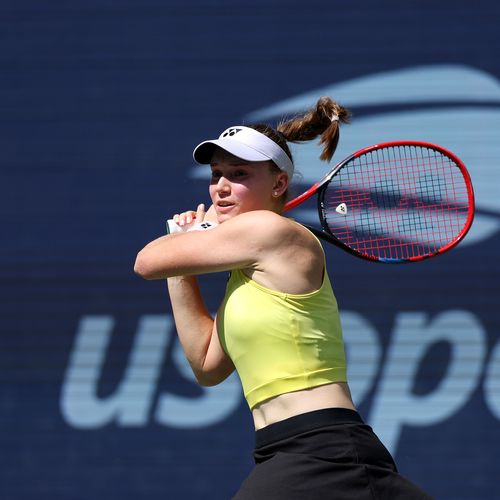
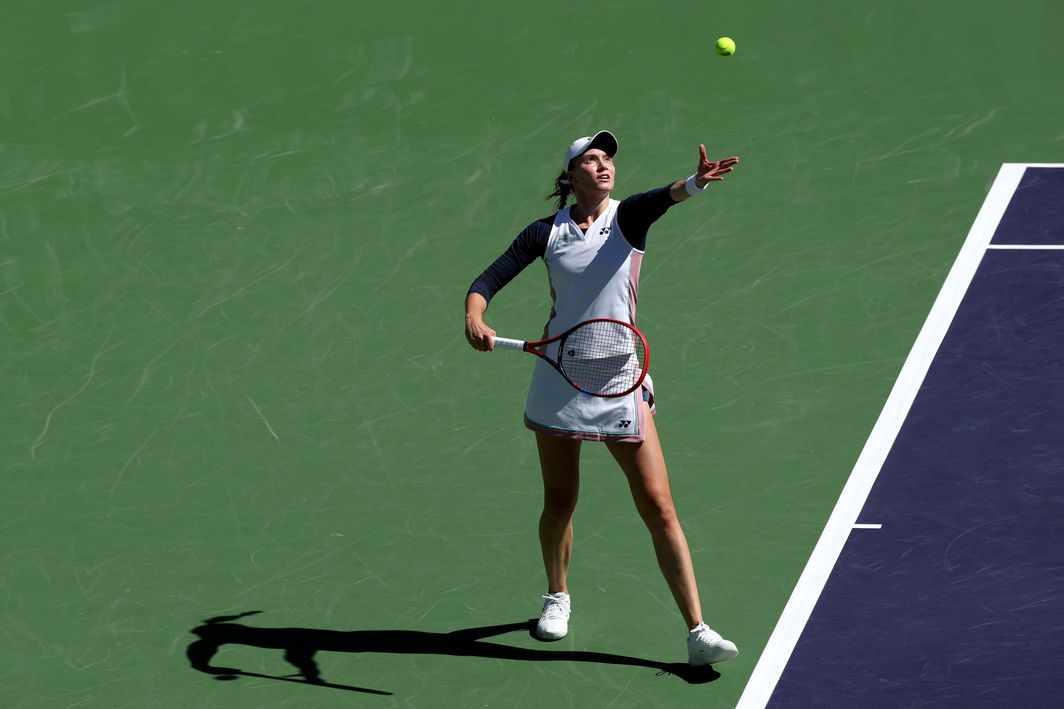
Her most convincing performance came against Naomi Osaka. Rybakina, the No. 2 seed, struck 29 winners and seven aces in a 6-1, 6-4 win that sent her to the US Open quarterfinals for the first time.
That set up Wednesday’s quarterfinal against Zheng Qinwen, the Olympic champion whose own run had begun in qualifying. For the first time all tournament, Rybakina found herself behind. Zheng took the opening set 6-3, the first Rybakina had surrendered in New York.
Rybakina answered in the second. She began taking the ball earlier, won six of the next seven games and carried the match into a third set that remained close until Zheng double-faulted to give up its only break. Rybakina served out a 3-6, 6-1, 6-4 win that took 2 hours, 14 minutes.
By the end of the afternoon, she had a place in the US Open semifinals and a scheduled appointment Monday with the PIF No. 1 ranking.
The body of work behind World No. 1
A season of titles, finals and difficult wins
Rybakina’s ascent had been building since late last season.
She won Ningbo in October, then closed the year by defeating Sabalenka in the WTA Finals Riyadh championship match. In January, she came back from 3-0 down in the deciding set to beat Sabalenka again and win the Australian Open.
Rybakina added Stuttgart in April. In Toronto, the matches began to accumulate -- four of them went three sets, and she spent nearly 11½ hours on court before Swiatek beat her in the final.
“I was playing really well, I can say, in Toronto and even Cincinnati,” Rybakina said. “In Toronto it was a lot of three-set matches, which also I think was tough. But at the same time, it built the confidence that you can win these difficult matches.”
At the close of 2025, the gap looked daunting: Sabalenka sat at 9,870 points, Rybakina at 4,350. Nine months later, it had shrunk to 414 -- and, for the first time, Rybakina had placed the No. 1 ranking entirely within her control.
She had put herself in position. But, as Rybakina sees it, the ranking follows the work.
“The No. 1 ranking is, of course, one of the goals,” she said. “But I think the main focus for me, for the team, is to win the titles, and then the ranking will follow up. We go match by match, but obviously, we want to win the titles, the tournaments. So that, I would say, is the main goal.”
By the numbers: The past 52 weeks
Since the end of the 2025 US Open, Rybakina has won 62 WTA-level matches, the most of any player.
She has reached six finals, tied with Pegula for the most in that span, and won four titles, more than any other player:
- Ningbo
- WTA Finals Riyadh
- Australian Open
- Stuttgart
She has beaten 16 Top 10 players in the past 52 weeks, six more than anyone else. Her 16-6 record against the Top 10 is a 72.7% winning percentage. Some more numbers:
- 1,569 winners: Most on tour
- 394 aces: Most on tour
- 65.5% of break points saved: Best among players with at least 10 matches played
Against the players who held No. 1
Rybakina had beaten a reigning World No. 1 nine times before becoming No. 1 herself.
Only Gabriela Sabatini, with 10, had done it more often before first reaching the top spot. Venus Williams also had nine.
Rybakina is 9-8 against reigning No. 1 players. Among players with at least 10 matches against a reigning World No. 1, only Serena Williams and Steffi Graf have a better winning percentage.
She has defeated nine of the last 10 women to hold the top ranking. Ashleigh Barty is the exception.
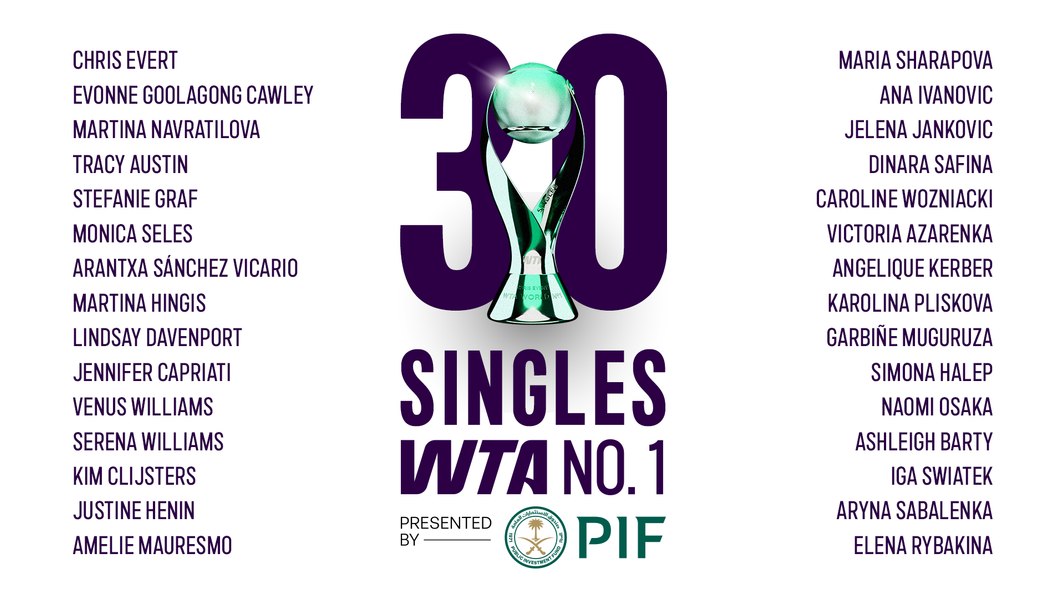
On Monday, Rybakina will become the 30th World No. 1 since the rankings began in 1975, the first from Kazakhstan and the second-oldest first-time No. 1 (27 years, 89 days). Angelique Kerber was older when she reached the top in 2016.
What the World No. 1 means to Rybakina
A first for Kazakhstan
Rybakina had not checked her phone by the time she sat down to speak Wednesday. She knew, though, what would be waiting when she did.
Kazakhstan had its first World No. 1, and the messages would be coming from a country where she has watched tennis acquire a larger presence with each trip home.
“It’s history, and I’m very proud representing Kazakhstan,” Rybakina said.
Growing up, Rybakina did not imagine a career in the game. Tennis was an after-school pleasure, a few unstructured hours with friends, and the possibility of making a career from it did not become a serious consideration until she was 17.
“I never thought that I’m going to be professional or I’m going to be even playing on these kind of tournaments on the biggest stages,” she said.
Now, when Rybakina goes back to Kazakhstan, she sees children at tennis facilities in every city she visits. Becoming No. 1 gives those young players someone from their own country against whom to measure their ambitions, making the possibility of a place at the sport’s summit less abstract.
A title still to play for
Rybakina had only just come off the court after beating Zheng, with a semifinal to prepare for and an interview room full of questions about a ranking that would not become official until Monday. She spoke about it as something she would understand differently years from now.
“I feel like you will appreciate and think about it even more when you finish your career,” she said. “Like now, you still need to keep on going.
“You never know how long you’re going to stay. All my thoughts are just for the next match.”
The Sabalenka benchmark
Her 99-week run at No. 1 set the standard
For nearly two years, the top line belonged to Aryna Sabalenka.
Her path there was not entirely linear. Sabalenka first reached No. 1 after the 2023 US Open, when defending champion Swiatek lost to Jelena Ostapenko in the fourth round. Sabalenka then lost the final to Coco Gauff, and Swiatek reclaimed the ranking eight weeks later at the WTA Finals.
But Sabalenka’s second stay was a different kind of run. It began on Oct. 21, 2024, after her first US Open title, and it will end Monday after 99 consecutive weeks.
Along the way, she won the 2025 Australian Open, defended her US Open title and finished both 2024 and 2025 as year-end No. 1. The 99-week stretch will stand as the sixth-longest uninterrupted stay at No. 1 in history. Only Steffi Graf, Serena Williams, Martina Navratilova, Ashleigh Barty and Chris Evert have held it longer without interruption.
Her 107 weeks at No. 1 overall will rank 10th all time, moving her past Lindsay Davenport’s 98. The numbers put Sabalenka in rare company, but they do not account for the daily requirement of staying there.
“Probably they don't understand how hard it is mentally and physically to keep up the level and mentally stay kind of like disconnected from that,” Sabalenka said earlier this week. “Because the moment you start thinking about that, you lose it.”
Will Sabalenka have the last word?
Rybakina has already beaten Sabalenka in two of the past year’s defining matches, but the ranking will change hands with Sabalenka still in the US Open draw.
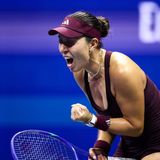
On Tuesday, she survived Linda Noskova in a third-set tiebreak to reach the semifinals, where Jessica Pegula awaits -- the same opponent Sabalenka has beaten in New York in each of the past two years.
Rybakina still has to get through Coco Gauff, who recovered from a ragged first set against Mirra Andreeva to earn the other semifinal spot.
But if both make the final, it would be an apt denouement to a tournament that has already reshaped the top of the game: the new No. 1 across the net from the player she replaced, and Sabalenka with the chance to answer Rybakina where it would matter most.
Would Sabalenka accept Rybakina becoming No. 1 if it meant a third straight US Open title?
“Yes, I’ll be more than happy,” she said.
When the question turned to whether that would mean more, Sabalenka smiled. “Yes, three-peat. Sounds great.”