
The Hard-Court Swing is officially in the books.
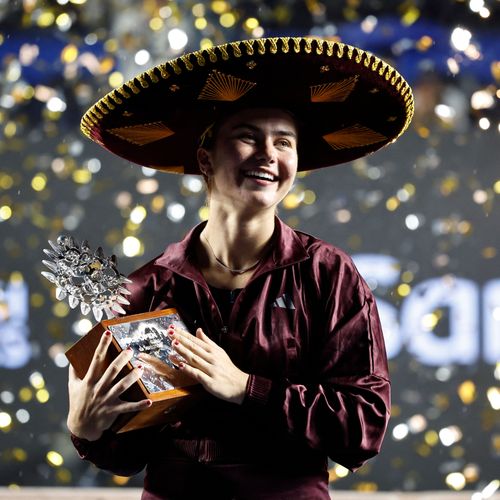
From mid-July through mid-September, the WTA Tour Driven by Mercedes-Benz hit 12 cities and produced 12 distinct champions. The indisputable MVP of the swing was Elena Rybakina, who won the US Open and rose to No. 1 in the PIF WTA Rankings for the first time.
But there were many stars of the swing, and many memorable moments and notable breakthroughs.
Before we turn our complete focus to Asia, our writers reflect on the biggest takeaways and most meaningful storylines from the last two months.
Which player outside the Top 10 had the best Hard-Court Swing?
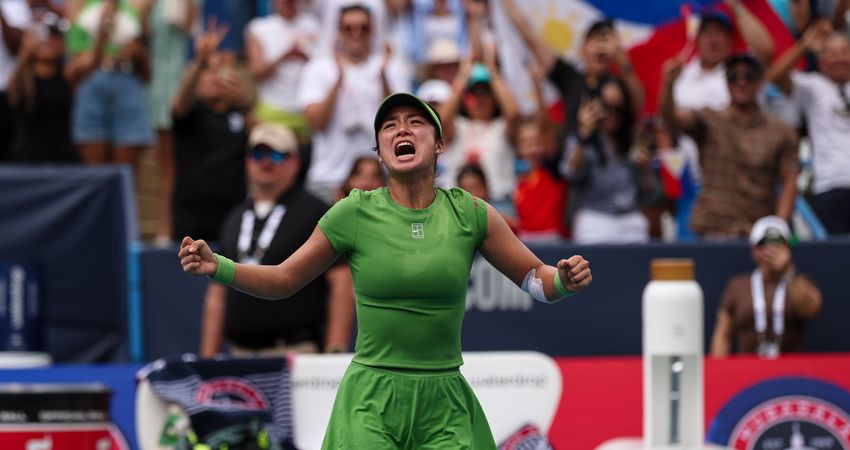
Brad Kallet: Alexandra Eala. With ever-growing hype and attention, and clearly the game to back it up, Eala entered the Hard-Court Swing still without a WTA title. That changed in Washington, D.C. where she mowed through a host of Top 10 players to capture her breakthrough trophy. Over the course of six days, Eala beat Zheng Qinwen, Leylah Fernandez, Elina Svitolina, Naomi Osaka and then Jessica Pegula in the final. That result propelled her into the Top 20 for the first time. She only had modest runs in Toronto, Cincinnati and New York, but her Hard-Court Swing was indisputably a success.
Cole Bambini: When Zheng played qualifiers in Toronto, it marked the first time she had to qualify since January 2023. After a first-round exit, she knew improvements needed to be made, so she underwent an intense training block in Bradenton, Florida and bypassed the Cincinnati Open. The decision paid off. Zheng rejuvenated her season, reaching the quarterfinals in New York as a qualifier, and her ranking improved from No. 121 to No. 52.
Alex Macpherson: Sara Bejlek should have been on everyone's radar after winning Abu Dhabi in February, but the diminutive 20-year-old Czech cemented herself as one to watch -- both in terms of her promise and her sheer entertainment value -- during the Hard-Court Swing. Bejlek's giant-killing run to the Cincinnati semifinals, in which she outran and out-maneuvered power merchants Aryna Sabalenka and Madison Keys, was the headline performance. It was foreshadowed at home in Prague, though, where Bejlek's first-round win over Anna Blinkova featured some of the most astonishing defense you'll see this year.
Who was the most surprising champion of the Hard-Court Swing?
Brad Kallet: Kristina Liutova. The 16-year-old, making her main draw debut, came through qualifying to win the Memphis Classic, becoming the youngest active champion on the WTA Tour Driven by Mercedes-Benz. In fact, she became the second youngest player ever to win a title in her tour debut. Prior to Memphis, she had never even played a WTA 125. And boy, did she earn this title. She won her qualifying match in a third-set tiebreaker, took out No. 1 seed and Top 20 player Ekaterina Alexandrova in the first round, and came from behind two more times, including against Darja Vidmanova in the final.
Cole Bambini: Considering her all-time great pedigree, the concept of Iga Swiatek as a champion is hardly surprising. But back in early August, Swiatek didn't appear to be one of the top contenders to win Toronto. Her season had included a major coaching switch and a host of underwhelming results, but it was revived in Toronto. Swiatek played her patient, methodical game and looked as strong as ever in winning her first title of the season.
Alex Macpherson: Before Memphis, Liutova was ranked No. 229 and had never even played a WTA qualifying draw. But she'd already made waves by winning three World Tennis titles in 2026, and showed she was able to translate that form to the WTA Tour by taking down her first three Top 100 opponents -- Alexandrova, Maya Joint and Caty McNally -- en route to becoming the first player born in 2010 to win a WTA title. She backed it up by qualifying for the US Open in her first attempt, extending her season record to 36-5 and lifting her ranking to No. 117 this week.
What was the best match of the Hard-Court Swing?
Brad Kallet: Iva Jovic vs. Eala in the US Open third round. Featuring two of the most talented and popular young stars in the world, this back-and-forth epic had the Arthur Ashe Stadium crowd buzzing for the entirety of its three hours. After Jovic fell to the ground in relief and exhaustion after converting her second match point, she got back on her feet to find Eala waiting for her, on her side of the net, for the congratulatory post-match hug. It was a fitting ending that perfectly encapsulated the wide range of emotions on the court and in the building.
This quote by Jovic, said shortly after the match, says it all: "It took losing my earrings, falling literally flat out on the floor, cuts on my knees, mental breakdowns. It took literally everything."
Cole Bambini: The US Open quarterfinal thriller between then-two-time defending champion Sabalenka and Wimbledon winner Linda Noskova was a classic. The two combined for 30 aces, and no player won more than three straight games at any given time. Noskova had the upper hand in the final set, up a break, but Sabalenka stormed back for the 7-6 (1), 3-6, 7-6 [10-7] victory.
Alex Macpherson: I have to pick just one? It's a reflection of the Hard-Court Swing's quality that my long list of choices stretches well into the double digits. I'll pick an outer-court classic that went underrated amidst the US Open's deluge of absolute bangers: Nikola Bartunkova's 6-7 (5), 6-2, 6-3 comeback win over Tatjana Maria in the second round. It was stylish, it was creative, it was bold -- the pair combined for 99 (!) points at net, and both won over half their share. And it felt like a baton passing for a certain approach to the game that will never go completely out of style, with 20-year-old Bartunkova triumphing with a modern update of Maria's old-school finesse.
What was the biggest upset of the Hard-Court Swing?
Brad Kallet: Bejlek's win over Sabalenka in Cincinnati. Sabalenka came into this match as the heavy favorite not only because of her experience and accolades, but also because of her clear size, strength and power advantages. But Bejlek stayed within herself and played her game, using her craftiness and finesse to throw Sabalenka off and frustrate her. She edged Sabalenka in a first-set tiebreaker, one of the most difficult things to do on tour, then came from 4-1 down in the second to pull off the upset. Coming into this match, Bejlek had lost all three of her matches against Top 10 players.
Cole Bambini: In her Cincinnati debut, Bejlek’s run to the semifinals was one to remember. The highlight of that tournament for the young Czech was her upset of Sabalenka, who led 5-1 in the first-set tiebreak before Bejlek rallied. The 7-6 (7), 6-4 win put Bejlek into her first WTA 1000 quarterfinal.
Alex Macpherson: Upsets were thin during the Hard-Court Swing; only once did a Top 10 player lose to a player outside the Top 50. That was Zheng's 7-5, 6-3 defeat of Swiatek in the US Open fourth round, and it gets my vote (along with her 1-6, 7-6 (3), 7-5 win over Keys one round earlier). The results themselves weren't necessarily shocking; Zheng's No. 121 ranking hardly reflected her ability. But the manner in which she pulled them off -- comebacks from 5-0 down in consecutive sets -- was extraordinary, and almost unbelievable to watch in real time.